1-800-868-2450
My Account | Cart | Checkout
Selecting the right reactor material can determine process safety, product purity, and equipment lifespan. A Quartz Reactor offers a compelling option for many controlled chemical applications. Its high silica content provides strong resistance to numerous acids, solvents, and thermal conditions. It also supports clear visual monitoring during mixing, heating, and crystallization.
In practical laboratory and pilot-scale work, engineers value quartz for its low contamination risk. A transparent vessel can reveal color changes, suspended particles, gas formation, or unexpected deposits. This visibility helps operators respond before a small deviation becomes a serious process issue. Quartz also tolerates rapid temperature changes better than many ordinary glass materials. However, it is not indestructible. Sudden mechanical impact, uneven heating, or unsuitable pressure can cause failure.
Reliable selection requires more than comparing material charts. Process temperature, chemical concentration, pressure, agitation, cleaning methods, and connection design should all receive careful review. Experienced teams normally confirm compatibility with technical data and controlled testing. Manufacturer documentation remains important, but independent verification can expose gaps between laboratory conditions and real production demands. That step is easy to overlook.
A well-designed Quartz Reactor can improve observation, purity control, and repeatability. Its advantages become clearer when the vessel matches the process rather than forcing the process to match the vessel. Yet quartz may not suit every reaction, especially those involving severe mechanical stress or highly specialized pressure requirements. Careful engineering judgment matters. The best choice is rarely the most attractive material alone; it is the safest, most measurable, and most maintainable solution for the application.
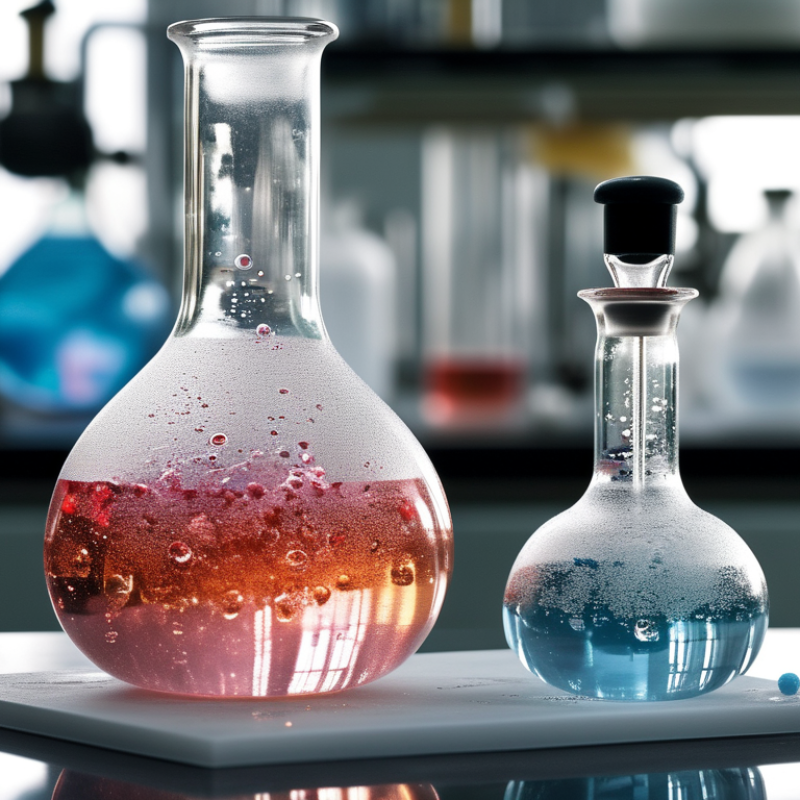
Why Choose a Quartz Reactor for Chemical Processing?
A quartz reactor is a vessel made from high-purity fused silica, used to contain chemical reactions under controlled heat and atmosphere. It is not ordinary glass. Its low contamination profile suits photochemistry, semiconductor research, high-temperature synthesis, and corrosive process studies. NIST data lists fused silica’s thermal expansion near 0.55 × 10⁻⁶ per kelvin. This helps the reactor resist dimensional change during heating. Technical data also places its softening temperature near 1,700°C, although practical operating limits are lower. ASTM C829 provides standardized methods for evaluating glass softening behavior.
In daily laboratory work, quartz reactors offer clear walls, so operators can observe color changes, bubbling, deposits, and phase separation. They also tolerate many acids and organic solvents. However, quartz is not universally resistant. Concentrated alkaline solutions can attack its surface, especially at elevated temperatures. Rapid cooling may create stress cracks. I have seen clean-looking reactors fail after repeated thermal cycling. The problem was not always visible damage. Sometimes poor heating control caused it. This detail deserves more attention.
Tips: Confirm chemical compatibility before each campaign. Heat gradually, use a calibrated thermocouple, and inspect cloudy zones or fine scratches. Keep a usage log. A reactor can appear reusable while its strength is quietly declining. NIST property data and ASTM testing guidance should support the selection, not replace process-specific trials.
Why Choose a Quartz Reactor for Chemical Processing?
How Quartz Properties Support Chemical Reaction Control
Quartz helps engineers control reactions by resisting many acids, solvents, and high-temperature conditions. Its low metal content also reduces unwanted contamination during sensitive processing. This matters when trace impurities can change color, yield, or reaction speed.
Thermal stability supports consistent heating across the reaction vessel. However, poor furnace design can still create hot spots. A quartz reactor cannot correct uneven temperature control by itself. Operators should verify temperature readings at several positions, especially near the liquid surface and vessel wall.
Quartz is also transparent to ultraviolet and visible light. This allows direct observation of bubbling, precipitation, and color changes during a reaction. Light-based processes benefit from this visibility. Yet cloudy deposits may reduce transmission over time. Regular inspection and suitable cleaning methods are essential.
Its smooth surface can simplify cleaning and reduce residue retention. That supports repeatable batch conditions. Still, quartz can crack under sudden temperature changes or mechanical stress. Careful heating, cooling, handling, and joint design are necessary. In practice, reliable reaction control depends on the entire system, not the vessel alone. Flow rate, stirring, pressure, and sensor placement remain equally important. Some designs appear efficient on paper but perform poorly when these details are ignored.
| Quartz Property or Design Factor | Typical Technical Data | How It Supports Chemical Processing | Reaction-Control Benefit | Important Operating Consideration |
|---|---|---|---|---|
| High-temperature capability | Fused silica softening point: approximately 1,665 °C; practical reactor service temperature depends on geometry, load, atmosphere, and thermal cycling. | Allows processes that require elevated temperatures, including thermal decomposition, calcination, evaporation, and gas-phase reactions. | Provides a wider temperature window for setting reaction rates, conversion, selectivity, and residence-time conditions. | Actual operating limits should be established from the reactor design and heating profile rather than from the softening point alone. |
| Very low coefficient of thermal expansion | Approximately 0.5–0.6 × 10⁻⁶ K−1 near room temperature. | Quartz changes dimension only slightly when heated or cooled compared with many conventional materials. | Reduces thermal-stress-related distortion and helps maintain consistent reactor volume, flow paths, and reaction-zone geometry. | Low expansion improves thermal-shock resistance, but sudden temperature changes can still damage quartz, especially when defects or uneven heating are present. |
| High chemical purity | High-purity fused silica is composed predominantly of amorphous SiO2; impurity levels depend on the selected material grade. | Minimizes the risk of metallic or particulate contamination entering sensitive reaction systems. | Supports cleaner products, more reliable analytical results, and improved reproducibility in laboratory and pilot-scale work. | Material certificates and cleaning procedures are needed when trace-element control is critical. |
| Broad optical transmission | Many fused-silica grades transmit ultraviolet light from roughly 190 nm and extend into the infrared; the exact range depends on grade and thickness. | Permits light to reach the reaction mixture for photochemical, UV-assisted, and in-situ optical-monitoring applications. | Enables controlled irradiation, optical inspection, spectroscopic measurement, and improved monitoring of reaction progress. | Transmission decreases outside the specified wavelength range and can be affected by impurities, surface condition, and deposits. |
| Chemical resistance | Generally resistant to water, many acids, and numerous solvents under appropriate conditions. | Helps maintain reactor integrity and limits corrosion-related contamination during a broad range of chemical operations. | Provides a stable reaction environment, supporting predictable composition and repeatable process performance. | Hydrofluoric acid and hot concentrated alkaline solutions attack silica; compatibility must be checked for every reagent, concentration, and temperature. |
| Low permeability and nonporous surface | Dense fused silica has a smooth, nonporous structure when properly fabricated and maintained. | Reduces liquid absorption and limits retention of residues compared with porous materials. | Improves batch-to-batch consistency and makes cleaning and visual inspection more straightforward. | Scratches, cracks, surface deposits, and poorly cleaned joints can still create contamination or hold-up locations. |
| Electrical insulation | Quartz is a strong electrical insulator with high electrical resistivity at ordinary temperatures. | Supports reactor configurations that combine quartz vessels with electrical heating, sensors, electrodes, or plasma-related equipment. | Helps separate electrical functions from the chemical process zone and can reduce unintended current paths. | Electrical performance changes with temperature, moisture, surface contamination, and system design. |
| Low catalytic interaction | Amorphous silica is comparatively inert in many process environments and does not readily supply transition-metal catalytic sites. | Reduces unwanted surface-catalyzed side reactions in applications where metallic surfaces could influence reaction chemistry. | Helps preserve intended reaction pathways and improves interpretation of kinetic or selectivity data. | Quartz is not universally inert; surface condition, temperature, deposits, and specific reactants can still affect reaction behavior. |
| Thermal and visual process stability | Quartz remains transparent and dimensionally stable over a broad range of commonly used laboratory and pilot-process conditions. | Allows direct observation of mixing, boiling, precipitation, color changes, fouling, and phase transitions. | Supports faster detection of abnormal temperature behavior, blockages, solids formation, and endpoint conditions. | Optical visibility can be reduced by condensation, coating, crystallization, or opaque process materials. |
| Compatibility with controlled atmospheres | Quartz is commonly used with inert, oxidizing, and vacuum-related process environments when temperature and pressure limits are respected. | Enables controlled oxidation, inert-gas treatment, vacuum heating, and gas–solid or gas–liquid experiments. | Improves control of oxygen exposure, partial pressure, gas composition, and residence time. | Pressure-rated design, seals, fittings, and thermal gradients must be evaluated separately; quartz vessels are not automatically suitable for pressurized service. |
Quartz reactors suit processes needing clean surfaces, thermal stability, and low contamination. They are common in high-purity chemical synthesis, photochemical reactions, and controlled etching. A transparent vessel lets operators watch color changes, precipitation, or gas formation. That visibility can expose problems before sampling. Not always. Quartz tolerates many acids and solvents, but not every chemical or operating condition. Compatibility charts and measured testing still matter.
Photochemistry benefits strongly from quartz because ultraviolet light passes through it. This supports oxidation, polymer modification, and selected pharmaceutical intermediate steps under controlled conditions. The reactor can include lamps, cooling jackets, stirrers, and gas inlets. In semiconductor-related cleaning, quartz helps maintain low metal contamination. It is also useful for laboratory corrosion studies and small-scale crystallization. Small volumes make temperature control easier.
High-temperature hydrolysis and materials research may also benefit from quartz equipment. Its smooth surface can reduce residue retention during careful cleaning. However, thermal shock remains a practical concern. A hot reactor exposed to cold liquid can crack quickly. I would not treat quartz as a universal solution. Pressure, alkali exposure, seals, and mechanical impact require separate review. Check it carefully. Operators should verify wall thickness, temperature limits, cleaning methods, and inspection records. That extra checking may seem slow, but it prevents costly failures. Another material may be safer.
Why Choose a Quartz Reactor for Chemical Processing?
Quartz reactor systems combine chemical resistance, thermal stability, and visual inspection. These features matter when processes involve corrosive gases, high temperatures, or strict contamination control. High-purity fused quartz can tolerate rapid heating better than many conventional materials, although thermal shock remains a real design risk.
Key Design Features of Quartz Reactor Systems
A reliable system starts with the reactor geometry. Smooth inner walls reduce residue buildup around wafers, substrates, or sample holders. Uniform gas distribution also supports consistent reaction conditions across the working zone. Engineers should examine wall thickness, joint design, flange sealing, and exhaust configuration together. A small dead zone can create unwanted deposits.
SEMI’s 2024 World Fab Forecast projected global semiconductor fabrication equipment spending above 100 billion dollars. This investment reflects growing demand for controlled, low-contamination processing environments. The International Energy Agency also reported rapid expansion in solar manufacturing capacity through 2024. These trends increase the need for reactor materials that remain stable during repeated thermal cycles. Still, quartz is not flawless. Mechanical impact, alkali contamination, and uneven cooling can shorten service life.
Tips: Specify quartz purity, temperature ramps, gas velocity, and cleaning chemistry before procurement. Inspect the tube after every demanding cycle. Look for haze, microcracks, or cloudy areas. Small defects can become expensive failures. An experienced process engineer should validate the design under actual operating conditions, not only laboratory assumptions.
Quartz has an exceptionally low coefficient of thermal expansion, helping reactor components withstand rapid temperature changes with reduced risk of cracking. This supports reliable high-temperature processing and improves dimensional stability.
Representative linear thermal expansion coefficients from approximately 20–300°C, measured in ×10⁻⁶/K. Actual values vary with material grade, temperature range, and manufacturing method.
Choosing a quartz reactor for industrial use starts with the process, not the vessel’s appearance. Fused quartz offers high purity, thermal resistance, and clear visibility during operation. It also handles many corrosive environments effectively. However, quartz is brittle and may crack after sudden temperature changes. That trade-off deserves careful attention.
Define the working volume, temperature range, pressure, and reaction time before contacting a manufacturer. Confirm chemical compatibility at actual concentrations and temperatures. Some alkaline solutions can attack quartz, especially during prolonged exposure. Select ports, baffles, thermowells, and agitator openings around the cleaning method. Poor access can leave residue in corners. That detail matters.
Check the reactor’s wall thickness and support structure for the planned scale. Quartz vessels are not automatically suitable for high-pressure service. Request pressure limits, thermal-shock data, dimensional drawings, and material traceability. Inspect seals and connections because leakage often starts outside the quartz body. In pilot operations, clear sightlines help operators notice color changes, deposits, or unstable mixing.
Scale-up can be imperfect. A reactor that performs well in a laboratory may heat unevenly at industrial volume. Use staged testing when possible. Review temperature mapping, mixing behavior, and emergency cooling requirements before approval. I would also question any design that relies only on visual cleanliness. Microscopic damage may remain hidden after repeated cleaning cycles.
I&M Industrials Inc.
10 Akron Drive
Greenville SC 29605
Phone: 864-277-2450
GSA Number – GS07F0379Y