1-800-868-2450
My Account | Cart | Checkout
Lightning can strike with little warning, turning a clear afternoon into a serious safety concern. For families, schools, outdoor workers, and event organizers, a Lightning Alert Device offers an additional layer of awareness. It can monitor nearby electrical activity and provide audible, visual, or connected warnings before conditions become dangerous. That extra minute may help people leave open fields, pause construction work, or move children indoors.
Real-world safety depends on more than technology. Weather agencies, trained staff, site procedures, and clear communication remain essential. A Lightning Alert Device should support these measures, not replace official forecasts or professional judgment. The most reliable systems are selected according to local climate, coverage requirements, installation conditions, and maintenance support. A device near a coastal sports field may face different challenges from one protecting a mountain worksite. Distance, terrain, interference, and user response all matter.
No alert system is perfect. False alarms may interrupt activities, while delayed warnings can create dangerous confidence. This is where honest testing and regular review become important. Users should check detection ranges, battery status, alert visibility, and emergency procedures before relying on the equipment. Independent guidance and manufacturer documentation can strengthen decisions. Global safety also requires practical thinking: different regions experience varied storm patterns, infrastructure limits, and communication needs. Choosing a Lightning Alert Device is therefore not simply a purchase. It is a measured decision about people, place, and preparedness. Small details matter. Safety deserves them.
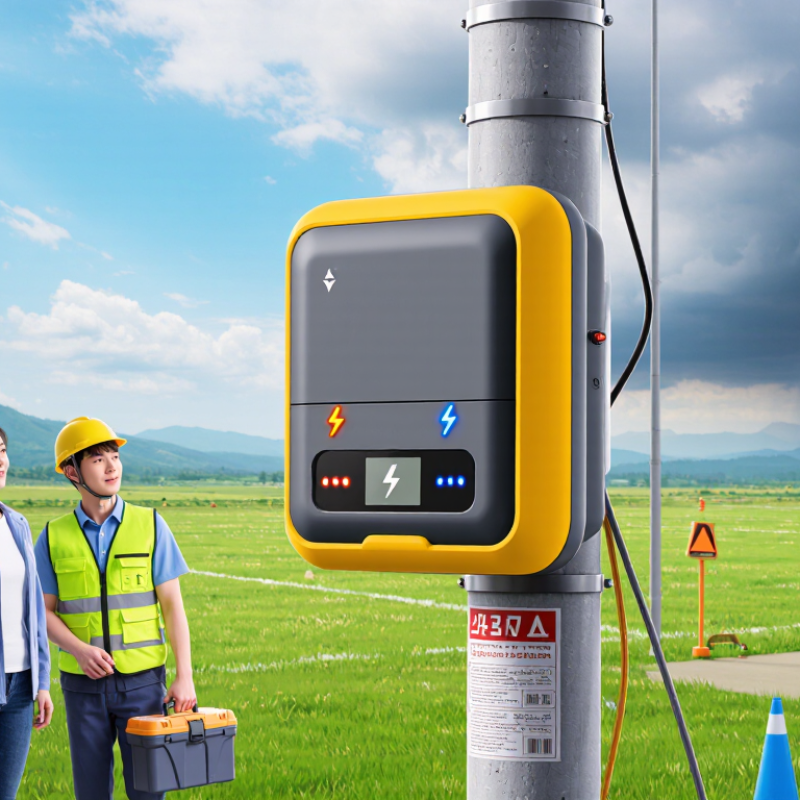
Why Choose a Lightning Alert Device for Global Safety?
A lightning alert device is not simply a loud alarm. IEC 62793:2016 defines core functions for thunderstorm warning systems. These functions include detecting lightning activity, processing threat information, and delivering timely warnings. The device may use electric-field changes, lightning signals, or connected detection networks. Its purpose is practical: create time for people to leave exposed areas.
That time matters. The World Meteorological Organization reported in 2023 that only 52% of countries had multi-hazard early warning systems. Lightning remains difficult because storms can intensify quickly. The U.S. National Weather Service records millions of lightning strikes annually and reports around 20 fatalities in recent years. Construction sites, sports grounds, farms, and outdoor events need more than weather awareness. They need a clear signal near the people at risk.
A reliable system should show detection range, warning logic, alert delay, and operating limits. IEC 62793 helps buyers ask those questions. It does not make every device equally accurate. That distinction matters. A sensor can miss activity, especially with poor placement or severe interference. Regular testing is essential. Human judgment still matters, too. A warning should trigger evacuation procedures, not replace them. Used with trained staff and local forecasts, the device becomes a stronger safety layer. Not perfect, but measurable.
Lightning is not only a distant summer spectacle. It can strike near homes, farms, roads, and outdoor workplaces. The World Meteorological Organization reports roughly 40 lightning deaths each day worldwide, a figure that makes personal preparation more urgent. These fatalities often occur when people underestimate changing skies. A quiet morning can become dangerous within minutes. Dark clouds, rising wind, and distant thunder deserve attention, even when rain has not started.
A lightning alert device adds an extra layer of awareness. It can detect nearby electrical activity or receive verified weather warnings, depending on its design. A clear alarm may prompt workers to leave open fields, move away from water, or shelter inside a substantial building. In practice, this matters when visibility is poor, phones are muted, or people are focused on machinery. Place the device where alerts are heard. Test it regularly. Battery failure remains an easy weakness.
Reliable safety decisions should combine device alerts with official forecasts and established emergency procedures. No detector can guarantee protection, and not every alert system measures risk in the same way. Users should check its detection range, warning delay, power backup, and maintenance needs before purchase. Simple routines often work best: pause outdoor tasks after thunder, confirm everyone’s location, and wait for an official all-clear. People sometimes delay. That hesitation can be costly.
Why Choose a Lightning Alert Device for Global Safety?
The sky changes first. Electric-field sensors detect shifts in atmospheric charge before lightning becomes visible. They monitor the air continuously around buildings, work sites, stadiums, and outdoor venues. As storm charge intensifies, the electric field changes sharply near the ground. A sensor measures these variations and sends readings to an alert system. Multiple sensors can compare timing and signal strength. This helps estimate storm direction, distance, and movement in real time.
The National Weather Service warns that lightning can strike more than 10 miles from a thunderstorm. That distance makes visual observation unreliable for outdoor safety decisions. The World Meteorological Organization also identifies lightning detection as a valuable tool for early warning and risk reduction. In the United States, NOAA reports roughly 20 million cloud-to-ground lightning flashes each year. Real-time electric-field monitoring can provide earlier awareness than waiting for thunder.
A practical alert device should use adjustable thresholds, clear signals, and regular maintenance. False alarms may occur when local electrical equipment disturbs the field. Sensor placement matters too. Tall structures, metal surfaces, and nearby power systems can influence readings. No system is infallible. Users still need trained judgment, site procedures, and verified weather information. The device supports decisions; it should not replace them. Data sources: NOAA National Severe Storms Laboratory, National Weather Service, and World Meteorological Organization.
| Safety and Detection Dimension | Real-World Data or Operating Range | How It Supports Safety | Important Limitation or Interpretation |
|---|---|---|---|
| Primary sensing variable | Vertical atmospheric electric field, commonly expressed in volts per metre (V/m) or kilovolts per metre (kV/m). | Storm development can be tracked by observing field strength, polarity changes, and rapid fluctuations near the ground. | The field is affected by terrain, buildings, overhead power lines, dust, and local electrical equipment. |
| Fair-weather reference | Near-surface fair-weather electric fields are typically around 100–150 V/m downward, although local conditions vary. | Provides a baseline against which storm-related changes can be compared. | A baseline is not universal; coastal, urban, mountainous, and polluted environments may produce different readings. |
| Storm-field behavior | Thunderstorm electric fields can rise to the kV/m range and may change rapidly as charge regions develop. | Increasing field magnitude or rapid field reversals can indicate that a charged storm is approaching or intensifying. | A high field does not identify the exact lightning location or guarantee that a strike will occur at a particular site. |
| Real-time measurement | Continuous monitoring Measurements can be sampled repeatedly, from seconds to sub-second intervals depending on the device design. | Frequent updates allow alerts to be triggered from trends instead of relying only on occasional weather observations. | Sampling rate, filtering, calibration, and alarm logic differ between systems. |
| Storm approach indication | Rising or increasingly variable electric-field values may occur before nearby lightning, but timing is not fixed. | Trend analysis can provide an earlier warning than waiting for audible thunder or a visible flash. | Warning lead time may range from very short to several minutes and cannot be guaranteed for every storm. |
| Lightning-distance context | Thunder can normally be heard from lightning several kilometres away; distant lightning may be visible or detected farther away than it can be heard. | Sensor alerts can support decisions to suspend outdoor work before a storm appears overhead. | Electric-field sensors alone generally estimate local atmospheric electrical conditions rather than giving a precise strike-distance measurement. |
| Detection of nearby electrical activity | Rapid field changes may accompany lightning initiation, nearby discharges, or strong charge rearrangement. | Fast changes can be used as a trigger for immediate warnings in exposed locations. | Short-range field changes may also be caused by switching equipment, vehicles, fences, or other electrical disturbances. |
| Alert decision method | Configurable thresholds Common inputs include absolute field strength, rate of change, persistence, and multiple alarm levels. | Different sites can use pre-alert, warning, and all-clear stages suited to their risk tolerance. | Thresholds should be validated locally because one fixed value is not appropriate for every climate or installation. |
| Geographic coverage | Local-site coverage Best suited to protecting a defined area around the installed sensor. | Works independently of cellular or internet-based regional lightning maps for local warning decisions. | A single sensor cannot provide reliable global storm tracking; wide-area coverage requires a distributed network or additional data sources. |
| Sensor placement | Open, unobstructed locations generally provide more representative atmospheric measurements than areas surrounded by tall structures. | Correct placement improves signal quality and reduces shielding and distortion. | Nearby metal structures, power systems, trees, and overhead cables can distort the measured field. |
| Weather compatibility | Electric-field sensing can operate during daylight, darkness, cloud cover, and rain. | Unlike optical-only observation, it does not require a visible lightning flash or clear line of sight. | Water, salt deposits, dust, ice, and contamination can affect sensor performance and require maintenance. |
| Recommended safety response | Use with a safety plan When a warning is issued, move people to a substantial enclosed building or a hard-topped enclosed vehicle. | Combining automatic alerts with clear evacuation procedures reduces exposure during rapidly changing storms. | Do not treat an all-clear as proof that lightning risk has ended; continue monitoring and follow local emergency guidance. |
| 30-minute safety principle | Wait at least 30 minutes after the last thunder before resuming outdoor activities; thunder means lightning is close enough to be a hazard. | Provides a simple operational rule when sensor readings, forecasts, or visual observations are uncertain. | This is a conservative safety guideline, not a measurement of exact storm distance. |
| Best-use environments | Construction sites, sports fields, outdoor events, farms, ports, utilities, campuses, and remote work areas. | Supports rapid notification where people may be dispersed and normal weather observation is difficult. | High-risk operations still require trained personnel, emergency communication, and formal weather procedures. |
| Overall safety value | Early local awareness | Provides continuous, site-specific information that can complement weather forecasts, radar, satellite data, and regional lightning networks. | No single detection method can predict every lightning strike; layered monitoring and prompt sheltering remain essential. |
Why Choose a Lightning Alert Device for Global Safety?
NOAA’s National Weather Service recommends the 30-minute rule: wait 30 minutes after the last thunder before leaving shelter. Thunder means lightning is close enough to strike. A lightning alert device can extend this warning across fields, beaches, factories, and outdoor venues. It gives staff a visible or audible signal before conditions become dangerous. However, an alert is not a guarantee. Weather can change faster than people expect.
National Weather Service data indicates that about 64% of lightning fatalities occur during leisure activities. The agency also reports roughly 20 lightning deaths and hundreds of injuries annually in the United States. These figures show why outdoor teams need a clear response plan. A device should support trained judgment, not replace it. I would not trust a screen alone. Sensor placement, battery condition, local terrain, and network limits can affect performance.
Tips: Move indoors immediately when an alert sounds. Do not shelter under isolated trees or open structures. Record the last thunder time. Restart the 30-minute count after every new thunderclap. Test alarms before events, and review the plan with every supervisor. Some sites still need better coverage; that uncomfortable gap deserves regular review.
Choosing a lightning alert device for global safety requires more than checking its advertised detection range. Range matters, but terrain, buildings, and storm direction can reduce real-world performance. A device claiming 40 kilometers may respond differently beside high-rise structures or in open farmland.
Accuracy should be tested through documented detection methods, not attractive percentages alone. Ask whether the device identifies cloud-to-ground strikes, intracloud activity, or both.
False alarms can interrupt work, while missed alerts can delay evacuation. Speed is equally important. A warning received seconds earlier may help move workers indoors, but speed without dependable accuracy creates confusion. Keep that balance in mind.
IEC compliance deserves careful review. Look for the exact IEC standards, test scope, certification body, and report date. “IEC compliant” is too vague by itself. Check electrical safety, electromagnetic compatibility, environmental resistance, and alarm reliability. Local installation rules may still apply. Do not assume one certificate covers every country.
From practical inspections, power backup is often overlooked. So are sensor placement and routine testing. A clear alarm light, audible signal, and network message provide useful redundancy. Yet no device performs perfectly in every storm. Weather changes quickly. Human response remains part of the system. Choose measurable specifications, verify field performance, and record maintenance results. That evidence is more valuable than a polished brochure.
I&M Industrials Inc.
10 Akron Drive
Greenville SC 29605
Phone: 864-277-2450
GSA Number – GS07F0379Y