What Are the Top Gas Compressor Types?
Choosing the right gas compressor begins with understanding the process, not memorizing equipment categories. A compressor may look impressive on a specification sheet, yet perform poorly when gas composition, pressure fluctuations, or cooling limits change. As compressor specialist Paul Hanlon observes, “Compressor selection must match the process, not simply the pressure requirement.” That practical warning remains highly relevant across industrial facilities.
This guide examines the leading gas compressor types, including reciprocating, rotary screw, centrifugal, axial, and scroll designs. Each type creates pressure differently. A reciprocating compressor uses pistons inside cylinders. A rotary screw compressor traps gas between rotating elements. A centrifugal compressor increases pressure through high-speed impellers. These differences affect flow capacity, efficiency, maintenance, noise, and operating flexibility.
There is no universal winner.
A refinery may favor a reciprocating unit for high-pressure service. A natural gas pipeline may require centrifugal equipment for steady, large-volume flow. Smaller workshops often value compact screw compressors and simpler installation. However, real applications rarely behave perfectly. Gas temperatures drift. Filters become dirty. Operators may run equipment away from its design point.
That is where selection becomes more than a catalog exercise. Engineers must compare surge control, lubrication needs, vibration, sealing, and lifecycle cost. They should also question optimistic efficiency claims. A technically suitable compressor can still become an expensive mistake when maintenance access is poor. The sections ahead explore these trade-offs clearly, helping readers connect each gas compressor type with the conditions where it performs best.
Gas Compressor Basics and Core Operating Principles
What Are the Top Gas Compressor Types?
Gas compressors raise pressure by reducing gas volume or adding velocity. Their core task sounds simple. It is not. Temperature, gas composition, pressure ratio, and flow stability all shape the design choice.
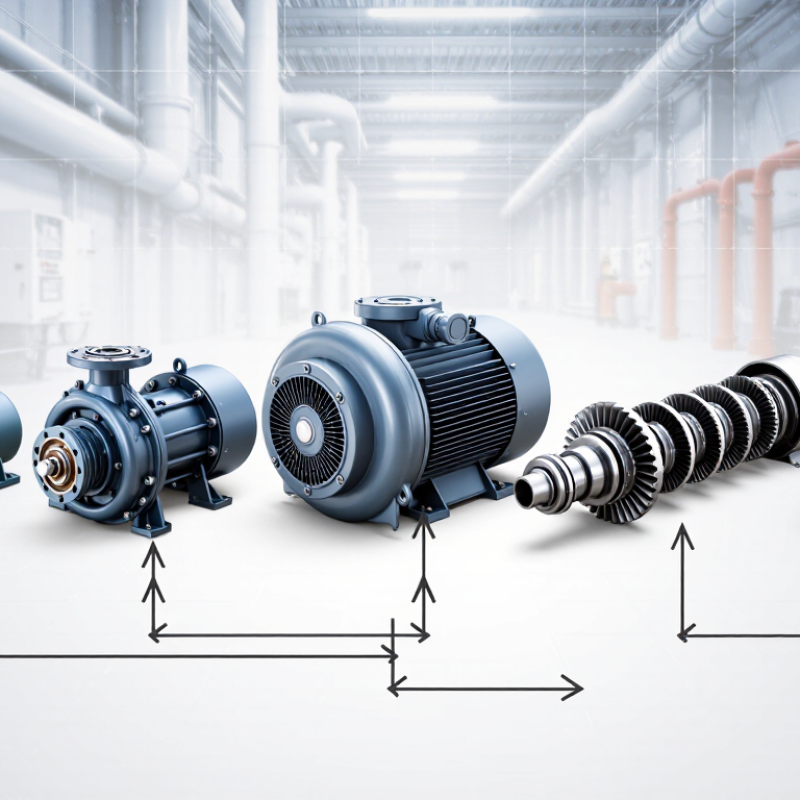
Reciprocating compressors use pistons inside cylinders. They suit high pressures and relatively lower flow rates. A valve opens during suction, then closes as the piston compresses the gas. Centrifugal compressors work differently. An impeller accelerates the gas, while a diffuser converts velocity into pressure. They handle large, steady flows efficiently, but surge can damage equipment. Rotary screw compressors trap gas between rotating elements. They provide smooth delivery and compact installation, although internal leakage increases when clearances or seals deteriorate.
The U.S. Department of Energy reports that compressed-air systems can consume about 10% of industrial electricity, depending on the facility and application. This figure shows why compression efficiency deserves practical attention, not just theoretical interest. Energy losses often begin with pressure drops, oversized machines, poor controls, or untreated leaks. The International Energy Agency estimated about 120 million tonnes of methane emissions from fossil fuel operations in 2023. Compressor seals and connections therefore require serious inspection.
API 617 and API 618 provide widely used engineering frameworks for centrifugal and reciprocating compressors. Still, a standard cannot replace field judgment. A centrifugal unit may be ideal on paper, yet unstable demand can make it inefficient. Even experienced teams can overlook moisture, pulsation, or changing gas properties. That is where commissioning data and regular vibration checks matter.
Positive Displacement Compressor Types and Their Applications
What Are the Top Gas Compressor Types?
Positive displacement compressors trap a fixed gas volume, then reduce its space to raise pressure. This operating principle suits applications requiring stable flow and controlled compression. Reciprocating compressors use pistons inside cylinders. They handle high pressures well and serve gas storage, cylinder filling, and process equipment. Their valves and seals need regular inspection, especially when dust or liquid enters the gas stream.
Rotary screw compressors use two rotating elements to compress gas continuously. They provide smooth delivery for manufacturing lines, instrument air, and low-to-medium pressure process duties. Rotary vane compressors are compact and mechanically simple. They can support laboratory systems, vacuum service, and small gas-handling units. Scroll compressors operate quietly and produce low pulsation, making them useful for medical, analytical, and light industrial equipment.
Each type has limitations. Reciprocating units may create vibration and require more maintenance points. Screw compressors can suffer from oil carryover or overheating if filtration and cooling are neglected. Rotary vane systems may wear quickly in contaminated environments. Selection should consider pressure ratio, required flow, gas composition, temperature, duty cycle, and maintenance access. A compressor that looks efficient on paper may perform poorly after installation. Field inspections often uncover undersized piping, weak ventilation, or unsuitable seals. These details matter. Engineers should verify calculations against real operating conditions, not only catalog figures. Safety relief devices, monitoring instruments, and appropriate materials also protect both equipment and operators.
Dynamic Compressor Types and Their Performance Characteristics
Dynamic compressors add energy to gas through a rotating impeller or blade row. Their output depends on velocity, pressure, and flow stability.
Centrifugal compressors suit moderate gas flow and substantial pressure increases. Gas enters axially, then moves outward through the impeller. Diffusers reduce velocity and recover pressure. In operation, inlet temperature, molecular weight, and rotational speed strongly affect performance. A small change in gas composition can shift the operating point.
Axial compressors handle very high flow rates with relatively low pressure rise per stage. Multiple blade rows build pressure gradually. They need clean gas and careful control because fouling can reduce efficiency. Mixed-flow designs sit between centrifugal and axial behavior. They can provide useful flow capacity without requiring a long multistage frame.
Performance is often evaluated through pressure ratio, efficiency, power demand, and surge margin. A compressor may reach impressive efficiency at its design point. Away from that point, losses grow quickly. Surge causes unstable flow and can produce severe vibration. Choke limits further flow increase. Operators therefore watch suction pressure, discharge temperature, vibration, and valve response.
Field measurements matter more than a perfect catalog curve. Real systems include piping losses, moisture, pulsation, and changing demand. I have found that early calculations can look convincing. They can still miss actual site behavior. Even a well-selected compressor needs monitoring and periodic review. Small errors in flow estimation can become expensive.
Key Factors for Comparing Gas Compressor Designs
What Are the Top Gas Compressor Types?
Comparing gas compressor designs requires more than checking maximum pressure. Reciprocating compressors suit high-pressure service and changing flow demand. Their cylinders deliver strong compression, but pulsation, valve wear, and vibration require careful maintenance. Centrifugal compressors handle large, steady gas volumes efficiently. They need stable operating conditions and may experience surge during low-flow operation. Rotary screw compressors offer compact layouts and smooth discharge. They are practical for moderate flow, although oil carryover and rotor clearances deserve attention.
Energy use often decides the final selection. The U.S. Department of Energy reports that compressed-air systems can consume 10–15% of industrial electricity. That figure is not a universal rule, but it shows why efficiency deserves measurement. Compare isentropic efficiency, pressure ratio, turndown range, and power at actual operating points. Do not rely only on catalog peak performance. Real plants rarely operate there.
Gas composition also changes the comparison. Wet gas, hydrogen-rich gas, corrosive contaminants, and varying molecular weight can affect sealing, lubrication, and material selection. The IEA’s Global Methane Tracker 2024 estimates that fossil fuel operations released about 120 million tonnes of methane in 2023. Leak prevention is therefore an operating priority, not merely an environmental preference. Engineers should examine seal design, monitoring access, maintenance intervals, and venting behavior. A cheaper compressor may become expensive after repeated shutdowns. The uncomfortable part is that lifecycle estimates often contain uncertain maintenance data. That uncertainty should be stated, tested, and reviewed.