Best 10 Jelly Roll Assembly Manufacturers for Global Buyers
Choosing a reliable Jelly Roll Assembly manufacturer can shape battery quality, production speed, and long-term supply stability. For global buyers, the decision involves more than factory size or attractive quotations. It requires evidence from the winding line, inspection records, welding process, and after-sales response.
Dr. Jeff Dahn, a respected battery researcher, has stated, “The battery is a very complicated system.” His point matters here. A jelly roll depends on precise electrode alignment, stable winding tension, clean separator handling, and consistent tab positioning. A tiny offset can create wrinkles, uneven pressure, or later performance loss. Experienced manufacturers usually provide sample validation, process capability data, traceability records, and clear acceptance standards. They should also explain how their equipment handles different cell formats, from cylindrical designs to pouch and prismatic applications.
This guide reviews ten Jelly Roll Assembly manufacturers for international buyers. The comparison considers manufacturing experience, automation depth, quality control, customization, delivery capacity, and technical support. Details matter. Look for laser or ultrasonic welding capability, vision inspection, tension monitoring, and documented defect control. Ask for real production evidence, not only polished brochures.
No ranking is perfect. Supplier strengths can change with ownership, staffing, or equipment investment. Some companies may perform well in prototypes but struggle with high-volume consistency. Others may offer excellent machinery while providing weak communication after installation. Buyers should verify claims through factory audits, trial orders, reference checks, and signed technical specifications. That extra work can feel slow. It is often cheaper than correcting misaligned rolls across thousands of cells.
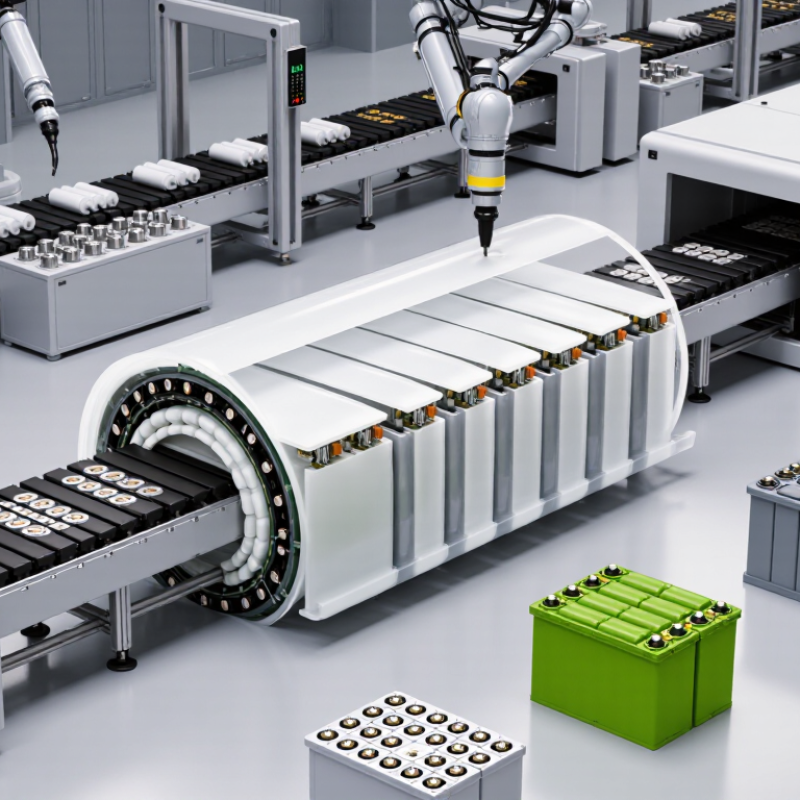
Jelly Roll Assembly: Definition, Structure, and Industrial Applications
A jelly roll assembly is a wound battery structure made from alternating anode, separator, and cathode layers. These materials form a compact cylindrical or prismatic core. The separator prevents direct contact while allowing lithium-ion movement. Metal tabs then collect current from the coated electrodes.
Manufacturing accuracy matters. Uneven tension can create wrinkles, gaps, or localized pressure. These defects may increase resistance and reduce cycle life. A practical assembly line controls winding speed, alignment, moisture, tab welding, and insulation. Clean rooms are essential. One overlooked particle can become a serious internal fault.
The International Energy Agency reported that global battery demand for electric vehicles reached about 750 GWh in 2023, rising roughly 40% from the previous year. This growth increases demand for reliable jelly roll assembly across electric vehicles, power tools, backup systems, and grid storage. For global buyers, inspection records should include electrode offset, weld strength, winding diameter, and leak testing. The U.S. Department of Energy also identifies manufacturing consistency as a major factor in improving battery cost and performance. Yet, no inspection plan is perfect. Sampling can miss rare defects, especially during rapid production. Buyers should therefore request process capability data, traceability records, and independent validation before approving large volumes.
Best 10 Jelly Roll Assembly Manufacturers for Global Buyers - Jelly Roll Assembly: Definition, Structure, and Industrial Applications
| Profile | Primary Manufacturing Focus | Typical Cell Chemistry | Jelly Roll Structure | Typical Electrode Width | Typical Cell Diameter | Key Assembly Processes | Main Applications | Common Compliance Requirements |
|---|---|---|---|---|---|---|---|---|
| Manufacturer Profile 01 | High-volume cylindrical cell assembly | Lithium nickel-manganese-cobalt oxide (NMC) | Positive electrode, separator, and negative electrode wound into a concentric roll | 45–75 mm | 18–46 mm | Slitting, precision winding, tab welding, insulation, electrolyte filling, and formation | Power tools, e-bikes, consumer electronics, and electric vehicles | UN 38.3, IEC 62133-2, IEC 62660, and ISO 9001 |
| Manufacturer Profile 02 | Long-cycle-life cylindrical battery production | Lithium iron phosphate (LFP) | Layered electrode-separator winding with controlled edge alignment | 50–90 mm | 21–60 mm | Continuous winding, ultrasonic or laser tab welding, vacuum drying, and leak testing | Energy storage systems, commercial vehicles, forklifts, and backup power | UN 38.3, IEC 62619, UL 1973, and ISO 14001 |
| Manufacturer Profile 03 | High-power battery cell assembly | Nickel-manganese-cobalt oxide or nickel-cobalt-aluminum oxide | Low-resistance wound electrode stack with reinforced separator layers | 40–70 mm | 18–46 mm | High-tension winding, multi-tab welding, high-rate electrolyte filling, and thermal inspection | Cordless tools, hybrid vehicles, robotics, and industrial equipment | IEC 62660, UL 2580, UN 38.3, and IATF 16949 where automotive supply applies |
| Manufacturer Profile 04 | Small-format precision cell manufacturing | Lithium cobalt oxide (LCO) | Compact jelly roll using thin coated electrodes and microporous separator film | 20–45 mm | 8–18 mm | Micro-slitting, precision winding, cap assembly, electrolyte dosing, and capacity grading | Portable electronics, medical devices, sensors, and compact instruments | IEC 62133-2, UN 38.3, IEC 62368-1, and ISO 13485 when used in medical products |
| Manufacturer Profile 05 | Large-format cylindrical cell production | LFP or high-nickel NMC | Long-length electrode roll with multiple current-collector tabs | 80–140 mm | 40–80 mm | Wide-web coating, large-format winding, laser welding, vacuum impregnation, and formation aging | Electric vehicles, buses, stationary storage, and marine systems | IEC 62660, UL 2580, UN 38.3, ISO 9001, and IATF 16949 |
| Manufacturer Profile 06 | Rechargeable battery pack and module integration | NMC or LFP cylindrical cells | Standard jelly roll enclosed in a cylindrical metal case before module integration | 45–100 mm | 18–60 mm | Cell matching, busbar welding, battery management system integration, and end-of-line testing | Light electric vehicles, energy storage, telecom backup, and industrial mobility | UN 38.3, IEC 62619, UL 1973, IEC 62133-2, and EMC requirements |
| Manufacturer Profile 07 | Customized low-volume and pilot production | LFP, NMC, LCO, or lithium titanate (LTO) | Application-specific winding design with adjustable electrode length and tab position | 20–120 mm | 10–70 mm | Prototype winding, material qualification, dimensional inspection, and electrical characterization | Research equipment, aerospace prototypes, robotics, and specialty mobility | UN 38.3, IEC 62133-2, ISO 9001, and application-specific qualification testing |
| Manufacturer Profile 08 | Fast-charging cylindrical cell assembly | LFP, LTO, or advanced NMC | Low-impedance wound structure designed for improved ionic and electronic transport | 45–90 mm | 18–60 mm | Multi-tab winding, low-resistance welding, controlled electrolyte filling, and accelerated formation | Fast-charging vehicles, warehouse equipment, buses, and high-duty-cycle tools | IEC 62660, UL 2580, UN 38.3, and thermal-abuse testing |
| Manufacturer Profile 09 | Safety-focused industrial battery production | Lithium iron phosphate (LFP) | Robust separator-supported jelly roll with reinforced insulation and controlled compression | 50–110 mm | 21–65 mm | Precision winding, separator inspection, case crimping, pressure testing, and extended aging | Grid storage, UPS systems, telecommunications, and industrial controls | IEC 62619, UL 1973, UN 38.3, IEC 63056, and ISO 14001 |
| Manufacturer Profile 10 | Automotive-grade cylindrical cell manufacturing | High-nickel NMC, NCA, or LFP | High-consistency jelly roll with automated alignment, tab placement, and contamination control | 60–140 mm | 30–80 mm | Automated coating inspection, precision winding, laser welding, dry-room assembly, formation, and traceability testing | Electric cars, hybrid vehicles, commercial vehicles, and battery energy storage | IATF 16949, ISO 9001, ISO 14001, IEC 62660, UN 38.3, and UL 2580 |