1-800-868-2450
My Account | Cart | Checkout
Choosing a Rapid Ev Charger manufacturer requires more than comparing prices and charging speeds. Global buyers need verified performance, dependable components, and responsive technical support after installation. This guide examines leading Chinese manufacturers serving international markets. It focuses on product quality, factory experience, certifications, customization, and delivery capability. Field experience shows that small details often decide long-term reliability. Connector temperature, cable flexibility, cooling performance, and software stability deserve close attention. Small details matter.
A polished website proves little. Buyers should request test reports, factory records, warranty terms, and references from comparable projects. They should also confirm whether certifications match the destination market, such as CE, UL, or other applicable requirements. Regional grid conditions can affect charger performance, so technical compatibility must be checked before purchase. Reliable manufacturers usually explain these risks clearly instead of promising universal compatibility. That honesty matters.
The strongest suppliers combine engineering expertise with practical manufacturing control. They may offer liquid-cooled systems, modular power units, remote monitoring, payment integration, and localized communication standards. However, advanced features can increase maintenance demands and total ownership costs. A cheaper quotation may become expensive after installation delays, replacement parts, or software limitations. Careful buyers compare the complete operating picture.
This overview is designed to help distributors, fleet operators, and charging-network developers make informed decisions. It does not treat any manufacturer as automatically suitable for every project. Factory audits, sample testing, and contract review remain necessary. Some conclusions may change as technology and regulations develop. That uncertainty should be acknowledged, not hidden.
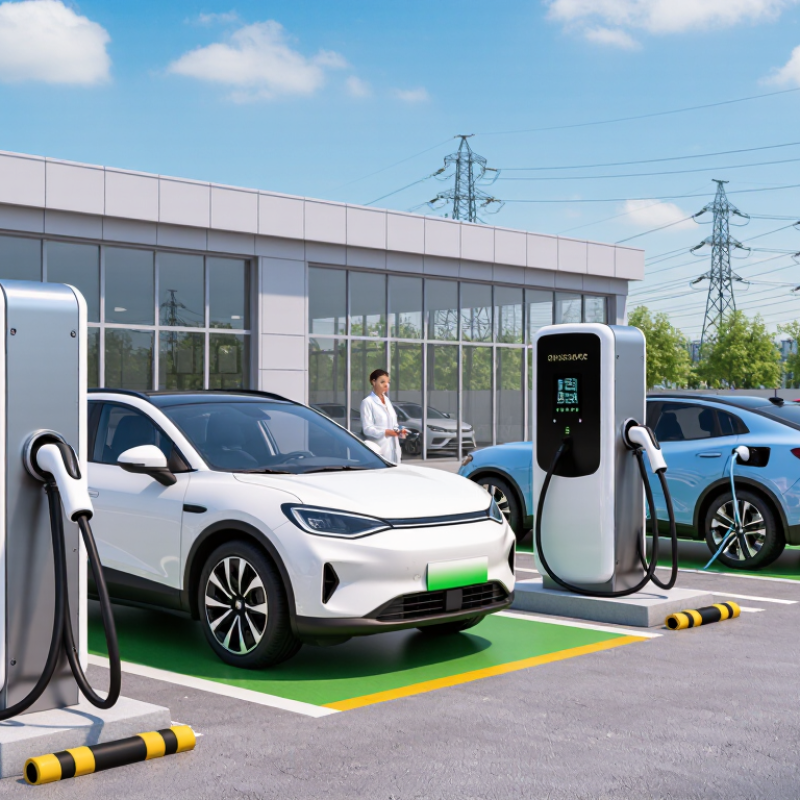
China’s new energy vehicle market reached 9.495 million sales in 2023, creating intense demand for reliable charging infrastructure. This figure includes passenger cars, commercial vehicles, and other electrified transport. It also reflects a practical challenge: more vehicles require faster, safer, and better-distributed charging access.
For global buyers, China’s rapid EV charger manufacturers offer strong production experience and flexible technical configurations. During supplier evaluations, I would check charging power, connector compatibility, thermal management, and enclosure protection. A 60 kW unit may suit urban parking, while a 240 kW system fits highway service areas better. Site conditions matter. Grid capacity, cable length, climate, and maintenance access can change the final choice.
Numbers alone can mislead. High vehicle sales do not guarantee equal charging coverage in every region. Rural locations may still face weaker grids and longer service distances. Certification documents should be verified, not simply accepted from a sales file. Factory audits, sample testing, software demonstrations, and spare-parts planning provide stronger evidence. Communication can also fail across languages and time zones. That risk is easy to underestimate. A lower purchase price may become expensive when installation delays, unstable software, or difficult repairs appear. Careful buyers should request transparent test records and realistic delivery schedules before approving a large order.
China Best Rapid EV Charger Manufacturers for Global Buyers
Rapid DC Charger Types: 20–600 kW Output and 95%+ Efficiency
Global buyers evaluating Chinese rapid EV charger manufacturers often start with output range. A 20–60 kW DC unit suits workplaces, hotels, and small fleet depots. Its cabinet is easier to place, and a 60 kWh battery may gain useful range during a lunch break. For highway service areas, 120–240 kW chargers reduce waiting when several vehicles arrive. At 360–600 kW, liquid-cooled cables and stronger site infrastructure become practical requirements. More power is not always better.
In field assessments, efficiency deserves the same attention as charging speed. A rated efficiency above 95% limits conversion losses, heat, and electricity waste. Ask for test conditions, because 95%+ efficiency at full load may not match partial-load performance. Check input voltage, power factor, protection ratings, and thermal behavior before approving a shipment. A clear factory test report is useful evidence. It is not the whole answer. Remote diagnostics, balanced load management, and safe current control also support dependable operation.
Reliable procurement depends on more than a specification sheet. Request sample logs, installation drawings, spare-parts plans, and technical support response times. During commissioning, record charging power every few minutes, especially during hot weather and unstable grid conditions. One overlooked detail can delay a site. A 600 kW system may require transformers, cooling equipment, and civil upgrades that change project economics. I would compare seasonal performance, not only laboratory figures. Some estimates look impressive. Real sites are less tidy.
China Best Rapid EV Charger Manufacturers for Global Buyers
Global buyers should examine standards before comparing charging speed or price. GB/T compatibility remains essential for vehicles and charging networks using Chinese specifications. CCS2 supports many international markets and common high-power charging applications. A reliable manufacturer should state connector options, output ranges, and testing conditions clearly. Vague claims create expensive installation risks.
OCPP 1.6J enables communication between chargers and central management systems. It can support remote monitoring, session records, fault alerts, and basic load management. However, protocol support is not always seamless. Firmware versions, message handling, and backend integration still require practical testing. Ask for a live interoperability demonstration, not only a certificate. This small step can reveal charging interruptions or delayed status updates.
IP54 protection helps shield the enclosure from dust and water splashes. It suits many outdoor locations, but it is not full waterproofing. Drainage, cable placement, ventilation, and local weather remain important. During site evaluation, inspect seals and cable entries physically. Real conditions are messier than laboratory reports. Buyers should also verify electrical safety tests, thermal performance, maintenance access, and spare-part availability. A fast charger can meet global standards and still perform poorly when installation guidance is weak.
Power is only the starting point when ranking Chinese rapid EV charger manufacturers. Check rated output, connector options, voltage range, and load sharing performance. A 180 kW unit may deliver less power when two vehicles charge together. Request independent test records, not only catalog figures. Ask whether the factory tests chargers at high temperature, low voltage, and repeated daily cycles.
Uptime deserves practical evidence. Review remote monitoring, fault response time, spare-parts storage, and firmware update procedures. A strong supplier should provide field data from similar climates and traffic levels. Examine service logs from operating sites, including reboot frequency and communication failures. Small details matter. A charger that restarts twice weekly can damage fleet schedules. However, uptime claims may be incomplete when vendors measure only laboratory performance. That deserves scrutiny.
Warranty terms should state coverage, response deadlines, replacement rules, and exclusions. A longer warranty is not automatically better. Verify who pays for transport, technician visits, and defective modules. ISO 9001 certification can support process reliability, but the certificate must match the actual manufacturing site and scope. Confirm its validity with the issuing body. During a factory audit, inspect calibration labels, incoming inspection records, burn-in areas, and final test reports. My ranking would combine these findings with total operating cost. No ranking is perfect. Local grid conditions and installer skill can change results.
China recorded 2.727 million public EV chargers in 2023, creating a deep manufacturing ecosystem for global buyers. This scale supports competitive pricing, flexible production, and faster component sourcing. However, charger volume alone does not prove product quality. It can also hide uneven maintenance, software reliability, and regional performance differences.
Experienced buyers should compare measurable procurement data. Review continuous power output, conversion efficiency, connector compatibility, cooling design, and protection ratings. Ask for factory test reports and independent certification records. A reliable supplier should explain uptime targets, warranty handling, spare-part access, and remote fault diagnosis. Request sample units before approving large orders. One successful test is not enough.
Tips: Build a scorecard before contacting manufacturers. Give each supplier clear weightings for price, efficiency, safety, delivery time, and after-sales support. Check performance at high temperatures and during repeated charging cycles. Also verify packaging, labeling, manuals, and local grid compatibility. The cheapest quotation may become costly after installation. Public charger data is useful, but it needs careful interpretation. Procurement decisions should combine national market scale with product-level evidence. Mistakes still happen, especially when buyers trust brochures more than test results.
| Procurement Dimension | Verified Figure or Typical Requirement | Why It Matters to Global Buyers | Reference |
|---|---|---|---|
| China public charging infrastructure | 2.727 million public charging points at the end of 2023 | Indicates a large domestic operating base and mature supply chain for charging equipment. | China Electric Vehicle Charging Infrastructure Promotion Alliance, 2023 year-end statistics |
| Public charger annual growth | Approximately 51.7% year-on-year growth in 2023 | Strong infrastructure expansion supports broader production capacity and component availability. | China Electric Vehicle Charging Infrastructure Promotion Alliance, 2023 statistics |
| Public AC charging points | Approximately 1.838 million units at the end of 2023 | AC equipment is suitable for workplaces, residential areas, hotels and long-dwell locations. | China Electric Vehicle Charging Infrastructure Promotion Alliance, 2023 year-end statistics |
| Public DC charging points | Approximately 889,000 units at the end of 2023 | Demonstrates substantial domestic demand for rapid-charging and high-power applications. | China Electric Vehicle Charging Infrastructure Promotion Alliance, 2023 year-end statistics |
| Common rapid-charger power classes | 60 kW, 120 kW, 160 kW, 180 kW, 240 kW and 360 kW configurations are widely used in commercial projects | Power should be matched with site capacity, traffic volume, vehicle mix and targeted charging time. | Common commercial DC charging configurations used in China and international markets |
| Typical DC output-voltage range | Approximately 200–1,000 V DC, depending on model and vehicle application | A wide voltage range improves compatibility with passenger cars, buses and commercial vehicles. | Typical specifications for modern liquid-cooled and air-cooled DC charging systems |
| Main international connector requirement | CCS2 is widely required in Europe, Australia and many other export markets; regional alternatives may apply | Connector selection must comply with the destination market and the target vehicle population. | Regional charging standards and market regulations |
| Communication protocol | OCPP 1.6J remains widely deployed; OCPP 2.0.1 is preferred for new networked installations | Open protocols reduce dependence on a single backend platform and simplify roaming or software integration. | Open Charge Alliance OCPP specifications |
| Ingress protection target | IP54 is common for protected installations; IP55 or higher is often requested for exposed outdoor sites | Higher protection helps equipment withstand rain, dust and outdoor operating conditions. | IEC 60529 classification and project-specific specifications |
| Operating temperature requirement | Typical commercial specifications cover approximately −20°C to +50°C; cold-climate projects may require wider ranges | The selected range should reflect the installation climate, altitude and cooling method. | Common manufacturer specification ranges for outdoor DC chargers |
| Efficiency target | High-efficiency DC power modules commonly specify at least 95% efficiency; exact performance varies by load | Higher efficiency reduces electricity losses, operating costs and thermal stress. | Typical technical requirements for modular DC charging systems |
| Export compliance documents | Common requirements include CE for the European Economic Area, UKCA for Great Britain, and applicable local electrical approvals | Documentation affects customs clearance, installation approval, insurance and market access. | Destination-market conformity and electrical safety regulations |
| Recommended factory-audit checkpoints | Quality system, electrical safety testing, burn-in testing, traceability, spare-parts support and after-sales response time | These checks help verify repeatable production quality rather than relying only on catalogue specifications. | Standard international procurement due-diligence practice |
Note: National infrastructure figures are rounded statistical values reported for the end of 2023. Technical ranges are representative procurement benchmarks and should be confirmed against the final project specification and destination-market regulations.
I&M Industrials Inc.
10 Akron Drive
Greenville SC 29605
Phone: 864-277-2450
GSA Number – GS07F0379Y