1-800-868-2450
My Account | Cart | Checkout
Choosing reliable INDUSTRIAL RFID TABLETS is rarely a simple specification exercise. Global buyers must compare read performance, Android support, protection ratings, battery life, and long-term service. A tablet that works smoothly in a clean warehouse may struggle beside metal racks, cold storage doors, or dusty loading bays.
This guide examines ten industrial RFID tablets for practical purchasing decisions. It considers UHF RFID range, barcode scanning accuracy, screen visibility, glove operation, charging methods, and network compatibility. It also reviews rugged construction, including sealed ports, impact resistance, and reliable performance during extended shifts. These details matter when workers scan pallets under harsh lighting or record inventory beside moving forklifts.
Real-world suitability remains more important than impressive brochures. Manufacturer data provides a useful starting point, but independent testing and buyer feedback can reveal limitations. Some models may advertise long read distances yet perform less effectively around dense liquids or stacked metal goods. That weakness deserves attention. Pricing, regional warranty coverage, software integration, and replacement availability also influence the total ownership cost. Compliance requirements vary by market, so buyers should verify certifications and wireless approvals locally. No single tablet fits every operation. The strongest choice depends on workflow, environment, budget, and technical support. This comparison offers a careful starting point, while leaving room for hands-on validation before a large deployment.
A suitable industrial RFID tablet must work beyond one warehouse and one network. Global buyers need UHF support aligned with EPC Gen2v2 and ISO 18000-63. Regional frequency limits still vary. Check them before purchasing. A tablet should also support Wi-Fi 6, private 5G, Bluetooth, and offline data capture. According to Grand View Research, the global RFID market was valued at about USD 14.5 billion in 2022. This growth increases demand for reliable field devices, not simply larger screens.
Real industrial use exposes small weaknesses. Workers may scan metal racks, wet cartons, or moving pallets under bright sunlight. An IP65 or IP68 rating, glove-friendly controls, and a replaceable battery matter. MIL-STD-810H testing can indicate durability, but laboratory claims need practical verification.
Deloitte’s 2024 Smart Manufacturing survey reported that 86% of manufacturers view smart manufacturing as important to competitiveness. Yet integration remains uneven. Buyers should test Android security updates, language support, remote management, and repair access across regions. No tablet fits every site.
Tips: Request sample units for local pilot testing. Measure read distance, scan speed, battery hours, and failure recovery. Confirm CE, FCC, UKCA, and other required approvals for target markets. Avoid choosing by price alone; downtime is rarely cheap. One overlooked detail can delay deployment.
Top 10 Industrial RFID Tablets for Global Buyers
Comparing industrial RFID tablets requires more than checking processor speed or screen size. In warehouse trials, read accuracy often matters more than peak performance. Buyers should examine supported RFID frequencies, antenna sensitivity, read distance, and tag-handling speed. A tablet that captures 200 tags quickly may still struggle near metal racks or liquid containers. That detail is easy to miss.
Durability is another practical dividing line. Look for an IP rating, tested drop resistance, sealed ports, and a screen usable with gloves. Battery capacity should support a full shift, while hot-swappable batteries can reduce downtime. Physical weight also matters. A rugged tablet carried for eight hours can cause fatigue, even when its specifications look impressive. No scorecard is perfect.
Connectivity deserves equal attention. Reliable Wi-Fi roaming, cellular options, Bluetooth, GPS, and offline data storage support work across large facilities and remote sites. Review the operating system’s security updates, device management tools, encryption, and integration with warehouse software. Service life should include spare parts, repair access, and documented technical support. Buyers should test samples under real conditions, including cold rooms, bright sunlight, forklift vibration, and weak network coverage. The result may challenge the original ranking. That is useful. Real work rarely follows a clean product sheet.
Core features used to compare the top 10 RFID tablet profiles: RFID capture capability, protection rating, battery endurance, connectivity, and field usability.
The RFID Readiness Index is a normalized 0–100 comparison score. It combines UHF RFID performance at 30%, IP and drop protection at 20%, battery endurance at 20%, wireless connectivity at 15%, and display and ergonomic usability at 15%. Higher scores indicate stronger suitability for warehouse, logistics, manufacturing, and field-service applications.
Industrial RFID tablets should be judged by working conditions, not processor speed alone. In warehouse trials, read distance, scan stability, battery endurance, and grip comfort often matter more. A fast device becomes less useful when gloves block the screen or cold temperatures reduce battery life. The strongest models usually combine reliable UHF RFID reading, bright displays, sealed housings, and flexible data connections. Test the antenna angle. It changes results.
For inventory counting, prioritize rapid tag capture, readable screens, and software that supports offline work. In manufacturing, drop resistance, barcode accuracy, and stable wireless communication deserve greater attention. Field service teams may need sunlight visibility, replaceable batteries, and precise location support. Retail and asset tracking applications often favor lighter designs with balanced RFID performance. Not every high-power tablet suits every task. That is easy to overlook.
A practical top ten ranking should compare performance by application, not by specifications alone. A device with a long reading range can create unwanted tag reads in crowded storage areas. Shorter range may improve control. During real inspections, operators also notice trigger placement, charging speed, and wrist fatigue. These details are rarely prominent in product sheets. I would repeat testing across different tag materials and warehouse layouts, because one successful demonstration proves very little. Reliability is built through repeated use, clear maintenance procedures, and measurable results.
Industrial RFID tablets serve different realities, not one universal workflow. In global warehouses, workers scan pallets beside loading bays, where dust, glare, and moving equipment are common. The 2024 MHI Annual Industry Report found that 43% of respondents already used robotics and automation. RFID tablets can extend that automation to receiving, picking, and cycle counting. Fast capture matters.
Cold-chain teams need sealed devices and readable screens. They may scan cartons inside refrigerated rooms, wearing thick gloves. In hospitals, staff can verify equipment locations and maintenance records without carrying paper forms. Field technicians use RFID tablets near wind turbines, pipelines, and remote utility sites. Offline storage becomes essential when networks disappear. That happens.
Manufacturing teams attach RFID tags to work orders, tools, and component bins. A tablet can show the next task, record inspection details, and reduce duplicate entry. Yet RFID is not magic. Metal surfaces, liquid products, and poor tag placement can weaken reads. Workers still need training and a simple recovery process. The International Labour Organization reported 2.93 million work-related deaths and 395 million non-fatal injuries globally in 2019, published in its 2023 safety report. Rugged devices support safer, traceable routines, but they cannot repair a badly designed process. Global buyers should test scanners with real gloves, real lighting, and real pressure. My practical concern remains simple: a tablet that survives the factory may still fail during rushed handovers.
The table compares representative industrial RFID tablet configurations commonly specified for global field operations. Values are typical market ranges or standard technology characteristics rather than claims for a specific brand or model. Buyers should confirm regional radio approvals, operating-system support, RFID frequency requirements, and environmental ratings before purchase.
| Rank | Industrial Tablet Type | Primary RFID Capability | Typical Display and Input | Typical Protection and Durability | Common Operating Environment | Industry-Specific Uses | Typical Connectivity | Representative Battery Profile | Global Buyer Considerations |
|---|---|---|---|---|---|---|---|---|---|
| 1 | Rugged UHF RFID Handheld Tablet | 860–960 MHz UHF EPC Gen2 / ISO 18000-63 compatible | 8–10.1 inch LCD Capacitive touch Glove and wet-touch support | IP65–IP67 1.2–1.8 m drop resistance Reinforced corners | Warehouses, distribution centers, outdoor yards, loading docks | Pallet identification, cycle counting, dock-door verification, shipment reconciliation | Wi-Fi 5/6, Bluetooth, optional 4G/5G, USB-C, GNSS | Approximately 7,000–10,000 mAh Hot-swappable battery often available | UHF regional frequency plans differ; verify local spectrum compliance and reader power limits |
| 2 | Industrial HF/NFC Tablet | 13.56 MHz HF ISO/IEC 14443, ISO/IEC 15693, NFC support | 8–10.1 inch display Multi-touch interface Optional integrated stylus | IP54–IP65 Shock-resistant housing Sealed physical controls | Manufacturing lines, laboratories, hospitals, controlled-access facilities | Work-in-process tracking, tool identification, staff authentication, maintenance records | Wi-Fi, Bluetooth, USB, optional cellular data, NFC peer communication | Approximately 5,000–8,000 mAh 6–12 hours of mixed use | HF/NFC provides short-range reading; confirm tag technology, security functions, and regional privacy requirements |
| 3 | Cold-Chain RFID Tablet | UHF RFID Optional HF/NFC module | 8–10 inch sunlight-readable display Touch operation with gloves High-brightness option | IP65–IP67 Typical operating range: approximately −20°C to 50°C Condensation-resistant design | Refrigerated warehouses, food logistics, pharmaceutical distribution, airports | Cold-room inventory, vaccine and medicine tracking, temperature-log association, dispatch checks | Wi-Fi, Bluetooth, 4G/5G, GNSS, USB-C Optional temperature-sensor interface | Approximately 6,000–10,000 mAh Replaceable battery preferred for multi-shift operations | Confirm battery performance, display operation, condensation protection, and validated temperature range |
| 4 | Vehicle-Mount RFID Tablet | UHF RFID External antenna or sled connection | 10–12 inch display Fixed-mount or detachable design Optional physical keyboard | IP54–IP65 Vibration-resistant mounting Wide viewing angle | Forklifts, reach trucks, container yards, cross-docking areas | Put-away confirmation, pallet movement, route execution, yard-location verification | Industrial Wi-Fi roaming, Bluetooth, Ethernet through dock, GNSS, serial or CAN options | Vehicle-powered through docking cradle Internal backup battery commonly included | Check forklift voltage compatibility, mounting certification, vibration testing, and safe-use requirements |
| 5 | Healthcare Asset-Tracking RFID Tablet | HF/NFC Optional UHF for room-level or inventory workflows | 8–10.1 inch display Antimicrobial housing option Easy-to-clean surface | IP54–IP65 Smooth disinfectant-resistant enclosure Fanless construction preferred | Hospitals, clinics, laboratories, elder-care facilities | Medical-equipment location, specimen identification, cabinet inventory, patient-wristband verification | Wi-Fi, Bluetooth Low Energy, optional cellular data, barcode scanning, NFC | Approximately 5,000–8,000 mAh 6–10 hours of normal clinical use | Confirm disinfectant compatibility, data protection, access control, and applicable healthcare regulations |
| 6 | Manufacturing Workstation RFID Tablet | HF/NFC UHF option for component and finished-goods tracking | 8–12 inch display 1,000-nit outdoor option Touchscreen usable with industrial gloves | IP65 1.2 m or higher drop resistance Fanless and dust-resistant chassis | Assembly lines, machine shops, electronics plants, clean production areas | Work-order confirmation, component genealogy, tool calibration, quality checkpoints | Industrial Wi-Fi, Bluetooth, USB, Ethernet via dock, optional serial interface | Approximately 6,000–9,000 mAh Dock charging for fixed stations | Verify integration with MES, ERP, industrial protocols, barcode scanners, and production-area safety rules |
| 7 | Retail and Apparel RFID Tablet | UHF RFID EPC Gen2 / ISO 18000-63 support | 7–8 inch lightweight display One-handed operation Optional integrated scan trigger | IP54–IP65 Approximately 1.0–1.5 m drop resistance Slim rugged enclosure | Retail stores, stockrooms, malls, outlet locations, omnichannel fulfillment areas | Shelf audits, fitting-room replenishment, stock accuracy, online-order picking, returns processing | Wi-Fi, Bluetooth, optional 4G/5G, barcode imaging, NFC | Approximately 4,000–7,000 mAh Designed for a full retail shift | Consider reading distance, antenna ergonomics, inventory-app compatibility, and regional cellular bands |
| 8 | Oil, Gas and Utilities RFID Tablet | UHF RFID HF/NFC option for worker or asset authentication | 8–10.1 inch display High-brightness option Physical programmable keys | IP65–IP68 options High drop and vibration resistance Optional intrinsically safe configuration | Refineries, substations, pipelines, utility fields, remote infrastructure sites | Valve and equipment inspection, spare-parts control, meter service, permit and maintenance workflows | Wi-Fi, private LTE/5G or public cellular, GNSS, Bluetooth, USB-C | Approximately 6,000–10,000 mAh Extended battery and vehicle charging options | Hazardous-area certification is configuration-specific; verify ATEX, IECEx, UL, or local requirements |
| 9 | Construction and Field-Service RFID Tablet | HF/NFC Optional UHF module for tools and materials | 8–10 inch sunlight-readable display Glove-friendly touch Camera for visual inspection | IP65–IP68 Approximately 1.5–1.8 m drop resistance Dust, rain, and vibration protection | Construction sites, telecom infrastructure, public works, remote service locations | Tool assignment, inspection-point verification, asset handover, service documentation, material receipt | Wi-Fi, 4G/5G, GNSS, Bluetooth, USB, optional laser or barcode scanner | Approximately 6,000–10,000 mAh 8–12 hours depending on cellular and camera use | Prioritize sunlight readability, GPS accuracy, offline applications, repairability, and local cellular coverage |
| 10 | Airport, Transport and Fleet RFID Tablet | UHF RFID HF/NFC for identity, access, and ticketing workflows | 8–10.1 inch display Anti-glare glass Optional physical scan trigger | IP54–IP65 Drop-resistant enclosure High-vibration mounting option | Airports, rail depots, ports, bus fleets, parcel and courier networks | Baggage or parcel tracking, vehicle inspection, container checks, loading verification, route handover | Wi-Fi roaming, 4G/5G, Bluetooth, GNSS, NFC, barcode imaging | Approximately 5,000–9,000 mAh Vehicle and desk charging cradles commonly used | Confirm wireless roaming, GNSS performance, transport-security controls, and integration with dispatch systems |
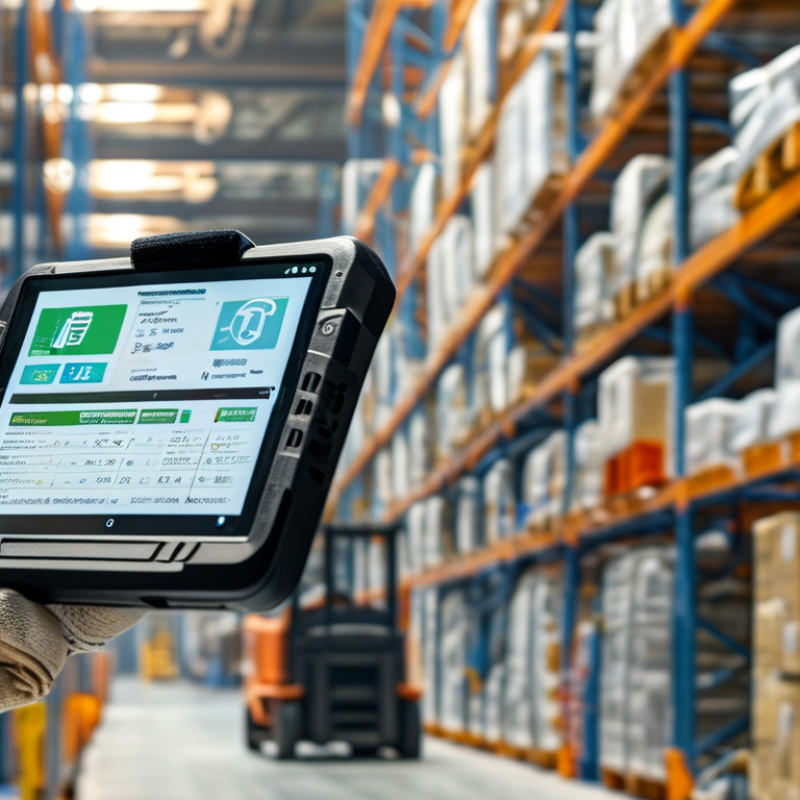
Choosing an industrial RFID tablet for international use requires more than comparing scan distance and screen size. In field trials, warehouse teams often value stable reading near metal racks more than impressive laboratory figures. Test the tablet with your actual tags, cartons, gloves, and lighting conditions. Performance can change sharply around liquids or dense packaging.
Check regional network bands, operating system support, language options, and charging standards before placing a large order. Confirm the RFID frequency matches local regulations and your existing readers. Ask for documented ingress protection, drop testing, battery cycle data, and accessory compatibility. A replaceable battery may matter during a twelve-hour shift. So does a clear service process.
Security deserves practical attention. Look for encrypted communication, controlled user access, regular firmware updates, and remote device management. Request test reports and warranty terms in writing. Do not rely on sales claims alone. Our early procurement checklist missed glove usability, which caused slower picking and more scanning errors. That was avoidable.
International buyers should also examine repair lead times, spare-part availability, customs paperwork, and technical support hours. A rugged shell is useful, but an unreadable screen in bright sunlight still creates delays. Ask operators to handle sample units for a full shift. Their feedback may challenge the original specification. That is often where better purchasing decisions begin.
I&M Industrials Inc.
10 Akron Drive
Greenville SC 29605
Phone: 864-277-2450
GSA Number – GS07F0379Y