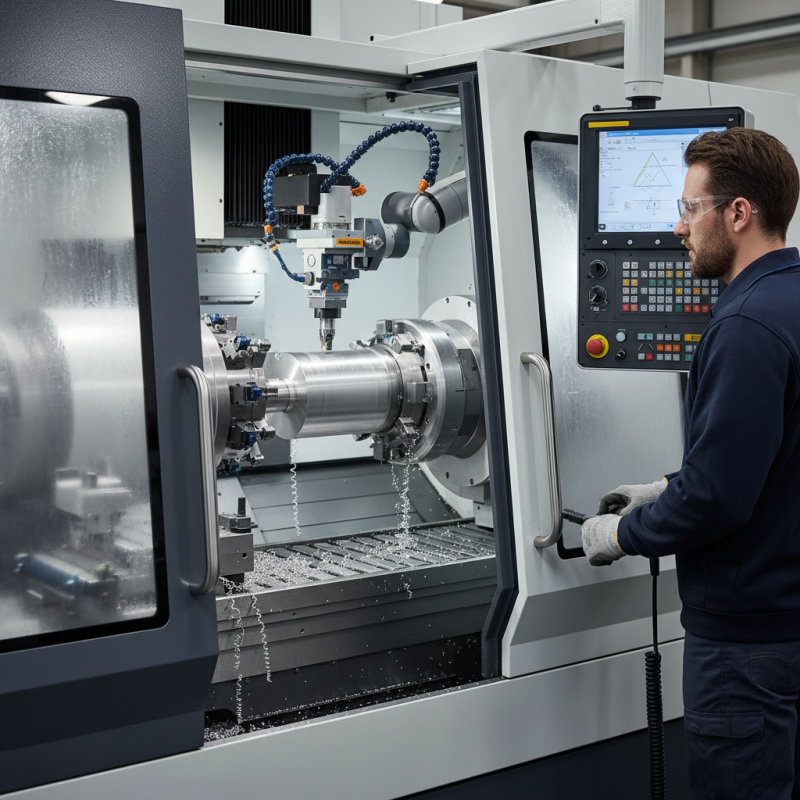
What is a CNC Turning Center and How Does It Work?
CNC Turning Center technology revolutionizes metalworking and manufacturing. This advanced system allows for precise shaping of materials. By using computer numerical control, it automates the machining process, enhancing efficiency.
A CNC Turning Center combines several key features. It typically includes a spindle, tooling, and a control panel. These components work together to create intricate designs from raw materials. They ensure each part meets exact specifications.
However, operating a CNC Turning Center is not without challenges. Technicians must understand programming languages and machine settings. Mistakes in setup can lead to product defects. Continuous learning is essential in this evolving field. Ultimately, mastering a CNC Turning Center requires both skill and experience.
What is a CNC Turning Center?
A CNC turning center is a sophisticated machine tool used in manufacturing. It automates the turning process, which involves shaping materials like metal or plastic. This equipment can achieve remarkable precision. Intricate designs can be crafted easily, which is vital for various applications. The heart of the machine is its spindle, where the workpiece rotates at high speeds. Tooling systems are mounted, allowing various cutting tools to engage the material.
The process begins with the CNC system interpreting a digital design. This data is converted into movement commands. The machine then executes these commands automatically. Operators usually input parameters like speed and feed rates. While this automation enhances efficiency, it requires regular monitoring. Human error can still occur, leading to defects in production. Some operators may overlook changes in material behavior or tooling wear. Such oversights can result in significant issues.
Understanding a CNC turning center involves recognizing its dual nature. It is both a tool for efficiency and a source of potential pitfalls. Attention to detail is crucial. Operators need training and experience. This can be challenging in busy production environments. The technology offers great benefits but demands respect for its complexities.
Key Components of a CNC Turning Center
CNC turning centers are essential machines in manufacturing. They automate the process of shaping materials with high precision. Understanding the key components can help in optimizing their use.
The spindle is a critical part. It rotates the workpiece at high speeds, allowing for efficient cutting. Modern spindles can reach speeds of up to 10,000 RPM. This high velocity enables quick production cycles.
Another important element is the turret. The turret holds multiple cutting tools. It allows for quick tool changes, reducing downtime. Some reports indicate that using a turret can cut production time by up to 30%. Not all operators fully utilize this feature. Underutilization may lead to inefficiencies in the workflow.
Machine control systems play a pivotal role. They translate design specifications into machine actions. Advanced software can improve accuracy and repeatability. However, operators sometimes face challenges in mastering these systems. This knowledge gap can result in unexpected errors. Regular training is vital for maximizing machine potential.
How CNC Turning Centers Operate
CNC turning centers are crucial in modern machining. They automate the process of shaping materials like metal and plastic. A spindle rotates the workpiece while tools shape it. This setup enhances precision and efficiency.
Operating a CNC turning center involves inputting a design into the computer. The machine then follows precise coordinates to create the desired shape. According to recent reports, businesses utilizing CNC technology can increase productivity by up to 30%. This is impressive but not without challenges.
Operators must regularly check tools for wear. A worn tool affects product quality. Additionally, programming errors can lead to scrap material, wasting resources. Understanding these nuances is vital for effective operation. Continuous training for operators can mitigate these issues, ensuring smoother workflows.
Applications of CNC Turning Centers in Manufacturing
CNC turning centers play a vital role in modern manufacturing. These machines are designed for precision machining of cylindrical parts. They rotate the workpiece while tools shape and cut it. This process ensures high accuracy and intricate designs.
The applications of CNC turning centers are extensive. They are commonly used in the automotive industry for producing shafts and valves. In aerospace, they create parts like engine components. Medical equipment also benefits from CNC turning, enabling the production of surgical instruments with tight tolerances. However, the technology isn't without its challenges. Sometimes, the settings for tool paths may need adjustment after initial tests. Ensuring the right material and tooling is crucial for quality production.
In addition, CNC turning centers can improve efficiency. They reduce manual labor and increase output. Yet, workers must be well-trained to manage these machines effectively. Misalignment or programming errors can lead to defects, requiring rework. Emphasizing training and continuous improvement is essential in harnessing the full potential of CNC turning centers.
CNC Turning Center Applications in Manufacturing
Advantages of Using CNC Turning Centers
CNC turning centers offer numerous advantages for manufacturing. They allow for precise machining of various materials. This precision leads to higher quality products. When parts are manufactured with accuracy, they fit better. This reduces the need for rework and helps save time and costs.
Using CNC turning centers can improve productivity significantly. They operate automatically, reducing manual labor. Operators can focus on other tasks while the machine works. This efficiency often translates into faster turnaround times for projects. However, it is essential to monitor tool wear closely. Neglecting this can lead to defects.
Tip: Regular maintenance is crucial. A well-maintained machine produces reliable results. Always check for lubrication and tool conditions. Remember, the initial setup might seem time-consuming, but it pays off later. Another crucial point is to invest time in operator training. Knowledgeable operators can exploit the full potential of CNC turning centers.
What is a CNC Turning Center and How Does It Work? - Advantages of Using CNC Turning Centers
| Feature | Description | Advantage |
| Accuracy | CNC turning centers are designed to produce highly precise parts with tight tolerances. | Minimizes waste and rework, enhances product quality. |
| Automation | Automated loading and unloading capabilities streamlines operations. | Increases production efficiency and reduces labor costs. |
| Complex Shapes | Ability to create intricate geometries and contours. | Expands design possibilities and application range. |
| Consistent Quality | Repeatable manufacturing process ensures uniformity. | Enhances customer satisfaction with reliable parts. |
| Material Versatility | Compatible with a wide range of materials, including metals and plastics. | Offers flexibility to work on various projects with one machine. |