2026 How to Choose the Right Industrial Compressor for Your Needs?
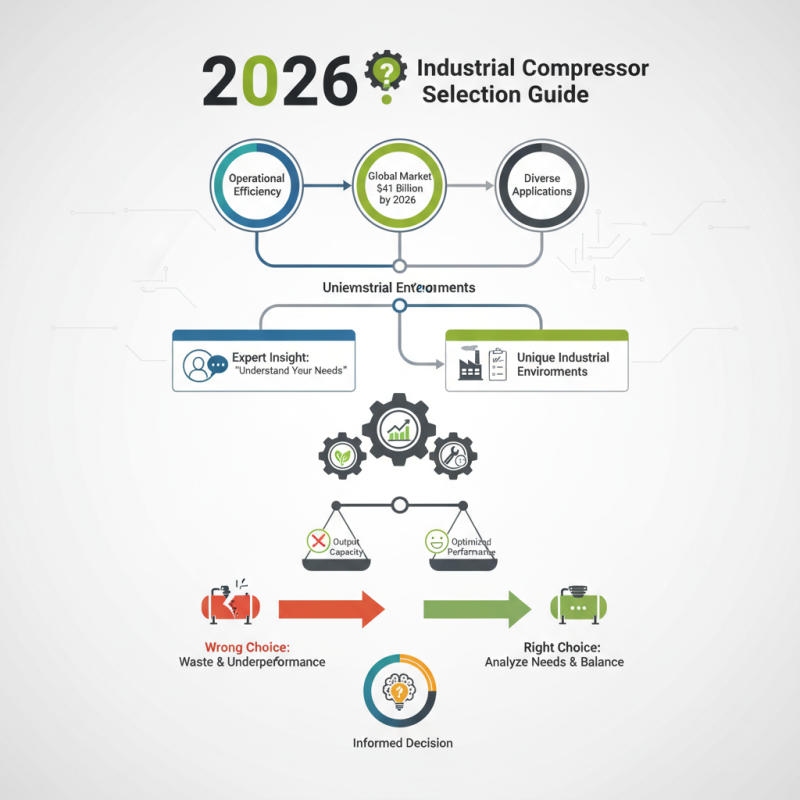
Choosing the right industrial compressor is crucial for operational efficiency. The global industrial compressor market is projected to reach $41 billion by 2026, highlighting its significance across various sectors. With diverse applications, selecting the ideal compressor can be daunting.
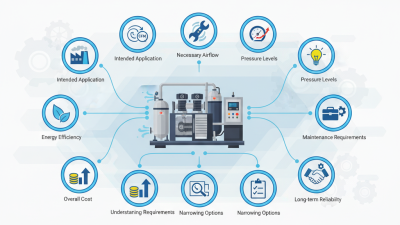
According to Dr. Emily Carter, an expert with over 15 years in the field, “Understanding your specific needs is key to optimizing performance.” This statement sheds light on the challenges many face when making such decisions. Each industrial environment presents unique requirements. Factors such as energy efficiency, output capacity, and maintenance play a vital role.
Mistakes in choosing the wrong compressor can lead to increased costs and reduced productivity. A poorly matched compressor may not only waste resources but also underperform in critical operations. Thus, it is essential to analyze your needs thoroughly. Balancing performance and efficiency is not always straightforward, but the right information can ease the process.
Understanding Different Types of Industrial Compressors Available
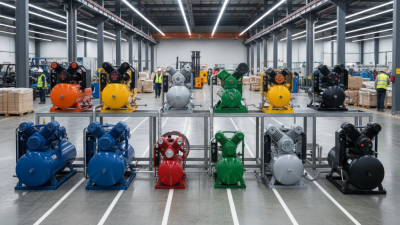
When selecting an industrial compressor, it’s crucial to understand the various types available. Each compressor type serves specific applications. For example, reciprocating compressors are often used for high-pressure requirements. They work efficiently in manufacturing where precision is key.
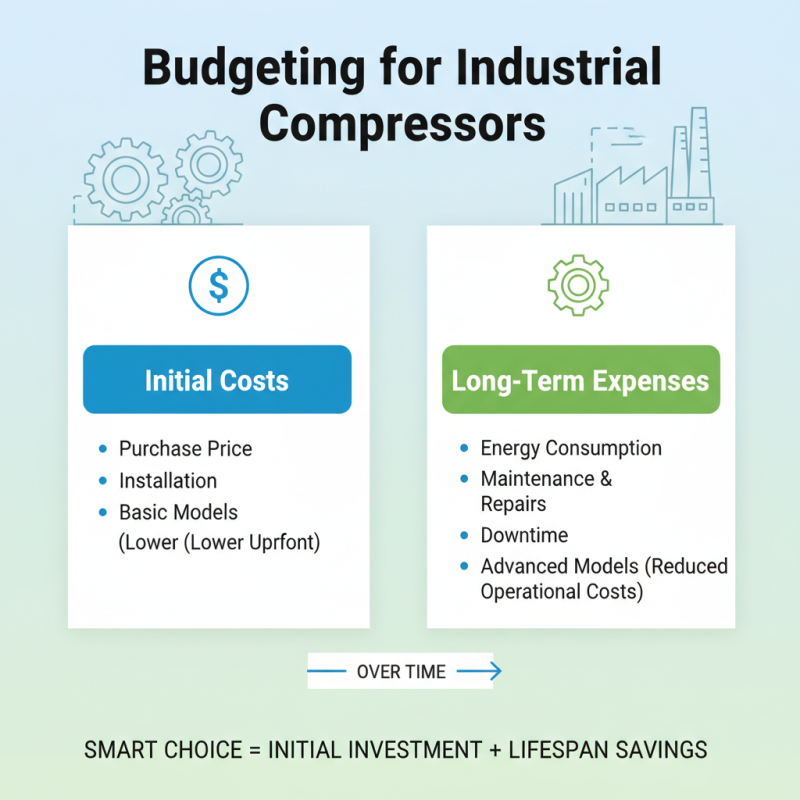
Screw compressors are another popular choice. They provide a continuous flow of air and are generally more energy-efficient than reciprocating models. Their reliability in continuous operations makes them suitable for large-scale operations. However, they can require more upfront investment and maintenance.
Rotary vane compressors offer versatility and simplicity, ideal for smaller facilities. They can struggle under heavy-duty tasks. Centrifugal compressors, meanwhile, excel in moving large volumes of air but may not fit every application. Assessing your needs and the operating environment is essential for optimal performance. Consider factors like energy costs and maintenance before making a decision.
2026 How to Choose the Right Industrial Compressor for Your Needs?
| Compressor Type |
Application |
Advantages |
Disadvantages |
Typical Capacity (CFM) |
| Reciprocating Compressor |
General pneumatic applications |
High efficiency, great versatility |
Relatively noisy, maintenance required |
5 - 1500 |
| Rotary Screw Compressor |
Continuous operation |
Low noise, minimal maintenance |
Higher initial cost |
20 - 5000 |
| Centrifugal Compressor |
Large-scale applications |
High flow rates, efficient at large volumes |
Not effective for low flow rates |
100 - 50000 |
| Scroll Compressor |
HVAC applications |
Compact size, low noise |
Limited capacity range |
1 - 100 |
Evaluating Key Specifications: Pressure, Flow Rate, and Power Requirements
When selecting an industrial compressor, understanding key specifications is crucial. Pressure ratings significantly impact efficiency and application. A compressor designed for 100 PSI may not meet the demands of operations requiring 150 PSI. According to industry reports, compressors operating at higher pressures can have a more significant energy draw. A case in point: compressors with a 200 PSI output increase energy consumption by about 15% compared to those limited to lower pressures.
Flow rate is another essential factor. This specification measures the volume of air delivered per minute, typically expressed in cubic feet per minute (CFM). For example, an application with high-demand tools may need 30 CFM, whereas lighter applications might only require 10 CFM. An improper flow rate selection could lead to inefficiency and excessive wear on components. A report indicated that under-sizing a compressor can reduce operational lifespan by 25% due to increased strain.
Power requirements reflect the energy consumption needed to operate a compressor. It's not uncommon for an operator to underestimate this aspect. Compressors require varying horsepower based on their specifications and applications. A mismatch can lead to unexpected costs. Detailed calculations provided by industry experts suggest regular evaluations and audits of power usage to ensure sustainability and efficiency in operations.
2026 Industrial Compressor Specifications Comparison
This chart illustrates the comparison of different industrial compressor specifications, including pressure, flow rate, and power requirements. These dimensions are crucial in selecting the right compressor for specific industrial needs.
Determining Your Application Requirements and Environmental Considerations
When selecting an industrial compressor, understanding your application requirements is crucial. Different industries have varying needs. A manufacturing facility may require high pressure and volume for pneumatic tools. A food processing plant might prioritize cleanliness and energy efficiency. Each scenario demands a tailored approach.
Environmental considerations also play a critical role in the decision-making process. Noise levels, emissions, and available space are vital factors. A compressor in a confined area must operate quietly. Additionally, energy consumption impacts sustainability goals. Balancing power and efficiency is not straightforward. Smaller compressors might be less efficient under heavy loads.
It’s important to reflect on these aspects. Sometimes the most powerful compressor isn't the best choice. A thorough assessment of specific needs can prevent costly mistakes. Investing time in understanding both application and environment will yield better long-term results. Aim for a solution that aligns with your operational context. This ensures optimal performance and reliability for your industrial processes.
Assessing Manufacturer Reputation and Customer Support Services
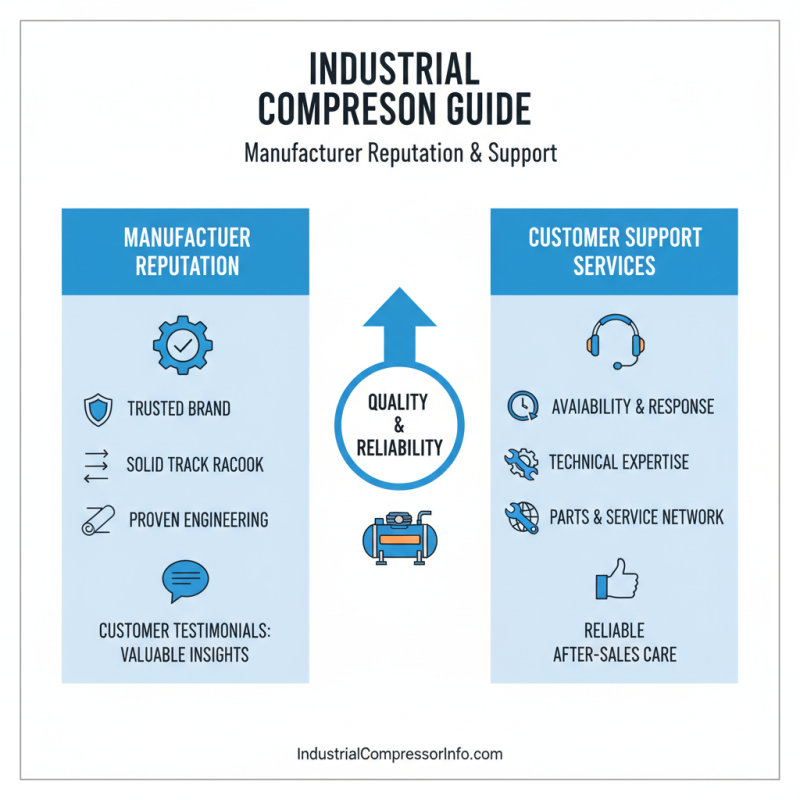
When selecting an industrial compressor, evaluating the manufacturer's reputation is critical. A trusted manufacturer often indicates quality. Look for companies with a solid track record in the industry. Check their experience in producing compressors that meet diverse needs. Seek out insights into their engineering processes. Customer testimonials can provide valuable information about product performance and reliability.
Another vital aspect is customer support services. A well-regarded manufacturer usually has responsive customer service teams. They should offer clear communication channels, such as hotlines or chat support. Consider the availability of technical support, particularly during installation and maintenance. If customers struggle to reach support, it reflects poorly on the manufacturer.
Investigate the warranty and service agreements offered. A transparent warranty signifies confidence in product durability. Additionally, assess the training and resources available to customers post-purchase. Companies that invest in customer education demonstrate a commitment to client success. Ultimately, a manufacturer's reputation and support services are not just add-ons; they can affect the long-term efficiency of your operations.