Best USB Car Charger for Fast Charging Your Devices?
In an era where smartphones and tablets are essential, having a reliable USB Car Charger is crucial. Fast charging capabilities not only save time but also ensure your devices stay powered during long drives. Many drivers overlook the importance of selecting the right charger. A poorly designed or low-quality charger can lead to overheating or even damage your devices.
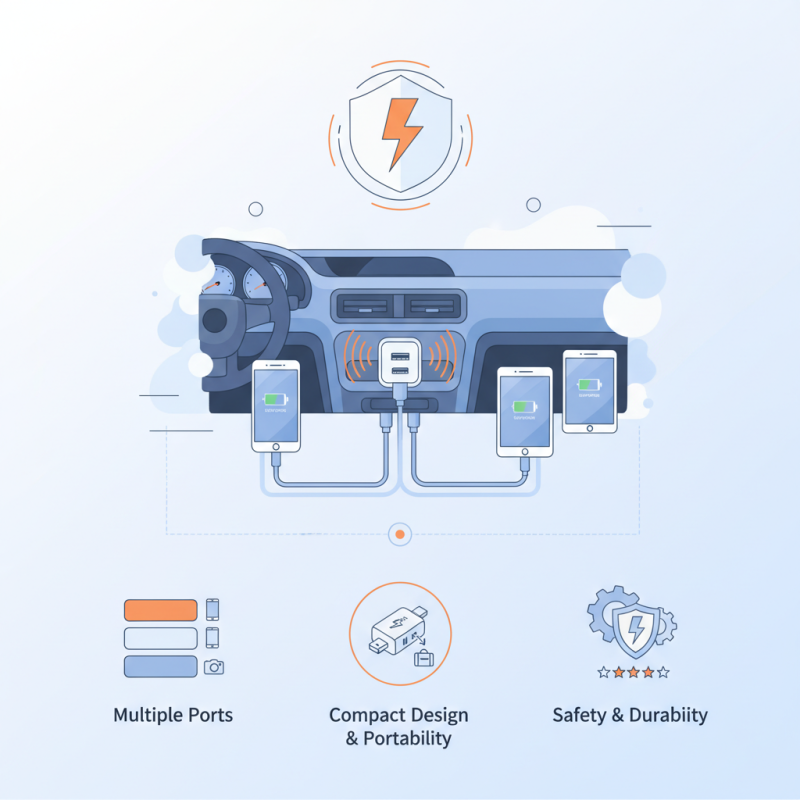
When searching for the best USB Car Charger, consider its output power and compatibility with various devices. Chargers with multiple ports offer flexibility for family trips, while compact designs ensure portability and ease of use. However, it's essential to read user reviews and choose brands with a reputation for safety and durability.
Ultimately, choosing the right USB Car Charger can be challenging but rewarding. Investing in a quality charger can enhance your driving experience. Protect your devices and stay connected on the road.
Understanding USB Car Charger Types and Their Specifications
When it comes to USB car chargers, understanding the types and their specifications is crucial. Many chargers on the market offer varying output capabilities. Basic models typically come with a single port and output around 5V at 2.1A. This is okay for standard charging speeds but may not suffice for rapid charging needs.
Fast charging technologies, like Qualcomm Quick Charge and USB Power Delivery, can dramatically increase your device's charging speed. Chargers that support these technologies usually have higher output ratings. You might find options that deliver up to 18W or more. It’s essential to check your device compatibility to make the most of these features.
Cables also play an important role in charging efficiency. Using a high-quality charging cable that supports fast charging can enhance performance. A poorly designed cable can slow down your charging speed, leading to frustration. It’s common for users to overlook this detail, yet it significantly impacts the overall experience. Always aim for certified cables that match your charger's specifications. This small step can make a notable difference in how quickly your devices power up on the go.
Key Features for Fast Charging: What to Look for in a USB Car Charger
When choosing a USB car charger for fast charging, there are several key features to consider. Look for high power output, typically between 18W and 30W. This ensures that your devices charge quickly. Dual or multiple ports are beneficial, allowing more than one device to charge simultaneously. Compatibility with fast charging protocols like Qualcomm Quick Charge or Power Delivery is also essential.
Tips: Check for a built-in safety mechanism. Overheating protection can prevent damage to your devices. A compact design is also valuable as it takes up less space. You might want to think about the length of the cable provided. A longer cable can sometimes offer more convenience.
It’s worth noting that not all chargers deliver the same performance. Some may claim fast charging but fall short in real-world scenarios. User reviews can provide insight. Reading about other users’ experiences might guide your choice. Don't overlook warranty options, which can indicate the manufacturer's confidence in their product. Always ensure you buy from reliable sources for guaranteed safety and performance.
Industry Standards: Fast Charging Protocols Explained (QC, PD, etc.)
In recent years, fast charging has become essential for mobile devices. Understanding different charging protocols is crucial. Two dominant standards in the industry are Qualcomm Quick Charge (QC) and USB Power Delivery (PD). QC can charge devices up to four times faster than conventional chargers. Meanwhile, PD is versatile, supporting a range of devices from smartphones to laptops.
Quantitative data highlights the growing popularity of these protocols. According to a report by MarketsandMarkets, the global fast charging market is projected to reach $30 billion by 2025. Such growth indicates a shift towards efficient charging solutions. Both QC and PD use smart technology to communicate with devices. This ensures optimal power delivery, preventing overheating and excessive battery wear.
Many consumers overlook compatibility issues. Not all devices support QC or PD even if the charger does. This gap can lead to frustration when devices don’t charge as expected. Furthermore, the speed of charging can diminish over time due to battery cycle aging. Users may find it beneficial to monitor their devices’ health regularly. Keeping devices updated also helps in optimizing charging processes.
Comparative Analysis of Fast Charging Speeds Among Leading Brands
Fast charging technology has transformed how we power our devices on the go. Recent studies indicate that many USB car chargers, when used effectively, can charge smartphones up to 50% in just 30 minutes. However, not all chargers perform equally. To truly understand fast charging speeds, one must look at various factors, including wattage, charging protocols, and cable quality.
For instance, chargers that support Power Delivery (PD) and Quick Charge (QC) can significantly reduce charging times. A report by Tech Research Group showed that chargers supporting PD can deliver up to 18 watts, whereas standard chargers may only offer around 5 watts. This disparity results in a noticeable difference in charging efficiency. Users often overlook the importance of using high-quality cables. A poor-quality cable can negate the benefits of a fast charger, hindering performance.
Tips: Opt for a charger that complies with industry standards. Check for customer reviews that highlight real-world performance. Keep your charging ports clean to ensure optimal connection, as dirt can impact charging speeds. Understanding these elements ensures that you choose a device that meets your fast charging needs effectively.
Safety Considerations: Protecting Your Devices While Fast Charging in Cars
When using a USB car charger for fast charging, safety should be a top priority. Fast charging generates heat, which can be harmful to both your devices and your vehicle’s electrical system. An effective way to mitigate this risk is to choose a charger with built-in safety features. Look for options that include overcurrent protection, overvoltage protection, and temperature control. These features can help safeguard your devices from damage while they are being charged.
It's essential to monitor your device while it charges. Sometimes, the charger can become excessively warm, which may not be safe. If you notice any unusual heat, unplug the charger immediately. Additionally, always use high-quality cables that are rated for fast charging. Cheap or damaged cables can cause short circuits and may affect charging speeds negatively. Investing in reliable cables is a small step that makes a big difference in your charging experience.
Regularly checking your charger for wear and tear is also important. Over time, connectors can become loose or corroded, compromising safety. If a charger feels flimsy or does not fit snugly, it might be time for a replacement. Staying vigilant about these small details can protect not just your devices but also your overall driving experience.
Best USB Car Charger for Fast Charging Your Devices? - Safety Considerations: Protecting Your Devices While Fast Charging in Cars
| Feature | Value | Safety Consideration | Notes |
| Charging Ports | Dual USB | Overcurrent Protection | Allows two devices to charge simultaneously. |
| Output Power | 24W (12V/2A) | Overvoltage Protection | Fast charging capability for most devices. |
| Compatibility | Universal | Short Circuit Protection | Works with all smartphones and tablets. |
| Size | Compact | Temperature Control | Easy to store and carry. |
| Charging Speed | Up to 2.4A | Surge Protection | Ensures devices charge quickly without damage. |