2026 Best Gas Air Compressor Types for Global Buyers?

Choosing the right gas air compressor in 2026 requires more than comparing horsepower and purchase prices. Global buyers must examine operating pressure, air demand, fuel availability, climate, maintenance access, and workplace conditions. A unit running smoothly in a dry workshop may struggle in coastal humidity or at high altitude. Details matter.

This guide introduces major compressor types, including reciprocating, rotary screw, and centrifugal models. Each design suits different workloads, duty cycles, and production environments. Reciprocating compressors can serve intermittent jobs and smaller facilities. Rotary screw systems often support steady industrial production. Centrifugal machines may fit large plants requiring substantial, continuous airflow. Real-world selection also depends on noise limits, ventilation, installation space, and trained service personnel.

The discussion follows practical purchasing experience and established engineering principles, while recognizing that regional specifications can differ. Buyers should verify fuel quality, pressure ratings, efficiency data, warranty terms, and available replacement parts with qualified suppliers. Do not rely on brochure figures alone. Actual performance may change with temperature, elevation, and maintenance habits. The choice is rarely simple. This overview cannot remove every uncertainty, and some recommendations may need revision after site testing. Still, it offers a reliable starting point for comparing gas air compressor types, identifying hidden ownership costs, and asking better questions before a global purchase.
2026 Best Gas Air Compressor Types for Global Buyers?

What Is a Gas Air Compressor and How Does It Work?

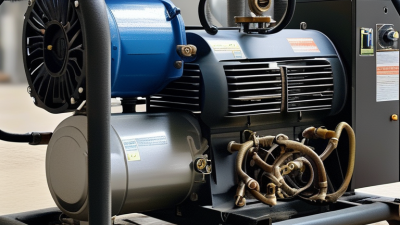
A gas air compressor uses a gas engine to power an air-compression element. The engine burns natural gas or another approved gaseous fuel. Its crankshaft or turbine then drives a reciprocating, rotary screw, or centrifugal compressor. The compressor draws ambient air through a filter, raises its pressure, and sends it through an aftercooler, receiver, and pipe network. The label can be confusing. It usually means gas-powered, not that the machine compresses natural gas.

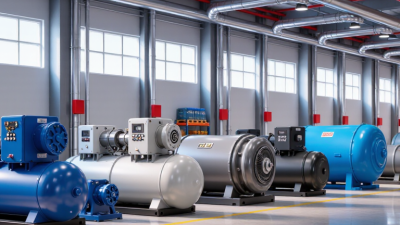
Reciprocating models suit intermittent demand and high pressure. Rotary screw units provide steadier airflow for workshops, construction sites, and remote facilities. Centrifugal machines fit large plants with continuous demand.

The U.S. Department of Energy’s Compressed Air Sourcebook states that compressed air may consume about 10% of industrial electricity. It also reports that leaks can waste 20–30% of compressor output.

A gas engine can reduce dependence on an unstable electrical supply, but fuel cost and exhaust management still matter.

Buyers should compare delivered air, not only motor horsepower. Check cubic feet per minute, pressure stability, altitude derating, fuel quality, cooling conditions, and maintenance access.

The International Energy Agency’s Energy Efficiency 2023 analysis highlights industrial motor systems as a major efficiency opportunity, supporting careful lifecycle evaluation.

A practical inspection should include leak testing, oil condition, vibration, and receiver sizing.

Specifications may look precise, yet field conditions often prove otherwise. That is where my earlier assumption would need testing.

Which Gas Air Compressor Types Suit Different Industrial Applications?

2026 Best Gas Air Compressor Types for Global Buyers?

Choosing a gas air compressor depends on the application, not only purchase price. Natural-gas reciprocating compressors suit intermittent demand, drilling support, and remote workshops. Their piston design delivers strong starting torque and flexible pressure control. Rotary screw compressors fit continuous plant air, mobile maintenance, and dusty industrial sites. They provide steadier airflow with fewer pulsations. Centrifugal compressors serve large process plants requiring high, stable flow. They become inefficient when demand changes sharply.

The U.S. Department of Energy reports that compressed-air systems can consume 10–15% of industrial electricity in many facilities. This figure concerns electric systems, but it highlights the cost of inefficient air production. Gas engine-driven units can reduce dependence on weak grids. They may also create higher maintenance and exhaust-management demands. I have seen buyers focus on fuel availability, then overlook cooling water, ventilation, and spare parts. That decision often becomes expensive. IEA’s Energy Efficiency 2023 report identifies industry as a major global energy consumer, making system efficiency a practical purchasing issue.

Tips: Match compressor type to the load profile. Record pressure, flow, operating hours, and ambient temperature for one week. Choose reciprocating units for variable, high-pressure work. Select screw units for stable medium-flow demand. Consider centrifugal equipment only after confirming continuous volume. Check local gas quality and service access. The cheapest unit is not always the lowest-cost machine. Forecasts can be wrong. Leave room for real operating data.

2026 Best Gas Air Compressor Types for Global Buyers? — Which Gas Air Compressor Types Suit Different Industrial Applications?

Typical performance ranges are indicative engineering values. Final selection should be based on gas composition, required pressure, flow, temperature, duty cycle, site regulations, and applicable safety standards.
Compressor Type Compression Principle Typical Discharge Pressure Typical Capacity Range Best-Fit Industrial Applications Main Advantages Key Limitations Application Suitability
Oil-Injected Rotary Screw Two intermeshing rotors continuously compress gas; oil provides sealing, cooling, and lubrication. Approximately 7–20 bar(g) for common industrial packages; multistage systems can reach higher pressures. Approximately 0.2–30 m³/min, depending on package size and pressure ratio. General plant air, pneumatic tools, workshops, construction sites, small gas boosting systems, and intermittent industrial production. Compact design, steady airflow, good part-load control, relatively low vibration, and simple installation. Oil carryover must be controlled; not ideal where gas must remain oil-free without additional separation and filtration. Versatile
Oil-Free Rotary Screw Dry rotors compress gas without oil in the compression chamber; timing gears maintain rotor clearance. Approximately 2–10 bar(g) per stage; multistage designs support higher pressures. Approximately 1–100 m³/min, depending on configuration. Food and beverage plants, pharmaceutical manufacturing, electronics, medical air, clean gas service, and sensitive instrumentation. No oil contamination from the compression chamber, reliable continuous operation, and suitable for high-purity air systems. Higher purchase cost, tighter operating clearances, and greater sensitivity to inlet air quality and moisture. Clean service
Reciprocating Piston A piston moves inside a cylinder to draw in and compress gas through suction and discharge valves. Approximately 10–350 bar(g), with multistage designs used for higher pressure. Approximately 0.01–15 m³/min; best suited to low or medium flow rates. Gas cylinder filling, laboratory systems, high-pressure testing, natural-gas vehicle refueling, refrigerant recovery, and specialty gas compression. High pressure capability, strong turndown potential, and efficient operation for intermittent or high-pressure duty. Greater vibration and pulsation, more wearing components, and higher maintenance requirements than rotary designs. High pressure
Oil-Free Reciprocating Piston Uses non-lubricated piston rings and cylinder materials to avoid oil in the compression chamber. Approximately 8–300 bar(g), depending on stages and design. Approximately 0.01–10 m³/min. Breathing air, medical gas, laboratory gas, oxygen service with suitable materials, and contamination-sensitive processes. Very low oil contamination risk and excellent suitability for high-pressure, low-flow applications. Seal and ring wear can be higher; heat management, filtration, and material compatibility are critical. Purity & pressure
Centrifugal A high-speed impeller converts velocity into pressure through aerodynamic diffusion. Approximately 3–15 bar(g) per stage; multistage units provide higher pressure. Approximately 100–100,000 m³/h, generally for large continuous flows. Large chemical plants, refineries, petrochemical facilities, steel production, power generation, and central utility air systems. High capacity, oil-free compression path, low vibration, and strong efficiency near the design point. Less efficient at low load, sensitive to surge and inlet conditions, and usually requires skilled control and maintenance. Large flow
Axial-Flow Multiple rotating and stationary blade rows progressively increase gas pressure along the axial flow path. Typically 2–10 bar(g) for industrial air-service trains; higher overall ratios require multiple stages. Usually above 100,000 m³/h in specialized installations. Very large air separation units, integrated steelworks, large power-generation systems, and continuous-process plants. Extremely high flow capability and efficient operation at a stable design load. High capital cost, narrow operating envelope, complex control requirements, and poor suitability for frequent load changes. Ultra-large flow
Diaphragm Compressor A flexible diaphragm separates the process gas from the hydraulic or mechanical drive mechanism. Approximately 10–1,000 bar(g), commonly used in multistage arrangements. Typically 0.001–10 m³/min. High-purity hydrogen, toxic or corrosive gases, specialty gas filling, semiconductor processes, and laboratory applications. Excellent gas containment, no direct piston-ring contamination, and suitable for hazardous or high-purity gases. Low capacity, higher cost per unit of flow, and diaphragm fatigue requires monitoring and planned replacement. High purity
Scroll Compressor Two interleaving spiral elements compress gas continuously as one orbiting scroll moves around a fixed scroll. Approximately 6–12 bar(g) for common air-service designs. Approximately 0.05–3 m³/min per module; multiple modules can be combined. Dental and medical air, laboratory equipment, small clean-air systems, HVAC applications, and low-noise installations. Low noise, low vibration, compact size, and minimal pulsation. Limited capacity and pressure range; scroll tips are sensitive to liquid carryover and contaminated inlet gas. Small clean systems
Rotary Vane Eccentric rotor-mounted vanes trap and progressively reduce gas volume inside the casing. Approximately 3–10 bar(g) for compression; vacuum and pressure-vacuum versions are also common. Approximately 0.1–30 m³/min. Packaging, printing, material handling, small pneumatic systems, vacuum lifting, and general workshop service. Simple construction, smooth flow, compact footprint, and good performance for moderate-duty applications. Vane wear and oil management can be significant; high-temperature or contaminated gas may shorten service life. Light to medium duty
Gas-Engine-Driven Air Compressor Package A natural-gas or biogas engine drives a compressor element such as a screw or reciprocating unit. Commonly 7–35 bar(g), depending on the driven compressor and package design. Approximately 1–100 m³/min, depending on engine and compressor size. Remote oil and gas sites, pipeline maintenance, mining, emergency power-limited locations, and off-grid construction operations. Reduced dependence on grid electricity, useful in remote areas, and potentially economical where pipeline gas is readily available. Emissions, fuel-gas quality, engine maintenance, noise, ventilation, hazardous-area classification, and local permitting must be addressed. Remote sites
Electric-Motor-Driven Gas Compressor An electric motor drives a screw, piston, centrifugal, or other compression element. Varies by compressor element; approximately 3–350 bar(g) is common across industrial configurations. From less than 0.01 to more than 100,000 m³/h, depending on type and size. Factory air systems, process plants, gas boosting, clean manufacturing, utilities, and sites with reliable electrical infrastructure. High controllability, lower local emissions, easier automation, and broad equipment selection. Requires suitable electrical capacity; hazardous-area installations may need certified motors, controls, and protection systems. General industrial

How to Compare Power, Capacity, Portability, and Fuel Efficiency

2026 Best Gas Air Compressor Types for Global Buyers?

Choosing a gas air compressor starts with delivered air, not engine size. Compare free air delivery (FAD), pressure, and duty cycle under ISO 1217 testing. A larger engine may provide higher power, but it can waste fuel during light workloads. The U.S. Department of Energy reports that compressed-air leaks can waste 20–30% of compressor output. Therefore, capacity calculations must include hose losses, leaks, and peak demand. A portable two-stage unit may suit construction sites, while a rotary screw model fits continuous industrial work.

Tips: Record actual airflow for one week. Check fuel used per operating hour. Then calculate fuel per cubic metre of delivered air. Compare this figure at working pressure, not at the laboratory rating. Portability also needs attention. Measure machine weight, wheel clearance, lifting points, and tank access. These details matter on muddy sites or narrow roads. Fuel quality and service access vary widely between countries.

The International Energy Agency links industrial efficiency gains with lower fuel demand, but real performance depends on maintenance and operating conditions. Clean filters, correct oil, and proper engine speed can protect efficiency. Altitude and high temperatures reduce output, sometimes noticeably. Ask suppliers for derating charts and independent test records. I would not trust a single brochure number. It may describe ideal conditions. Emission rules also differ, so buyers should verify local requirements before shipment. U.S. DOE compressed-air guidance and ISO 1217 provide useful benchmarks, but field measurements remain more reliable.

What Global Buyers Should Know About Safety, Emissions, and Regulations

For global buyers, the best gas air compressor depends on pressure, duty cycle, and local fuel access. Reciprocating compressors suit high-pressure, intermittent work. Rotary screw units deliver steadier airflow for continuous operations. Natural-gas engines can reduce diesel dependence, but they still produce nitrogen oxides, carbon monoxide, and methane.

Safety begins with the installation, not the brochure. A compressor room needs ventilation, gas detection, emergency isolation, and correctly rated electrical equipment. OSHA 29 CFR 1910.242(b) limits compressed-air cleaning pressure to 30 psi at the nozzle. ISO 1217 supports reliable compressor performance testing, while ISO 8573-1 defines compressed-air purity classes. Buyers should request test conditions in writing. Otherwise, “rated flow” may be difficult to compare.

Emissions rules vary sharply. In the United States, spark-ignition engine requirements may fall under EPA 40 CFR Part 60, Subpart JJJJ. European projects may involve Stage V requirements, national permits, and future Machinery Regulation obligations. The IEA’s Global Methane Tracker 2024 estimated nearly 120 million tonnes of methane emissions from fossil-fuel operations in 2023. That figure makes leak detection important, even when the compressor burns natural gas. Enclosed engines, oxidation catalysts, and continuous monitoring can help. They do not remove every risk. A practical weakness remains: fuel quality, altitude, maintenance, and operator habits can change real emissions. Global buyers should verify local certification, service capability, noise limits, and emergency procedures before comparing purchase prices.

2026 Best Gas Air Compressor Types for Global Buyers

Direct CO₂ emission factors for fuels commonly used by engine-driven air compressors. Lower values generally indicate lower direct combustion emissions, while total climate impact also depends on methane leakage, operating efficiency, maintenance, and local electricity generation.

Natural-gas engine compressors produce fewer direct CO₂ emissions per unit of energy than diesel or gasoline engines, but buyers should also verify methane-emission controls, ventilation, ignition protection, noise limits, pressure-vessel certification, and applicable national standards. Electric compressors have no on-site fuel-combustion emissions; their total emissions depend on the electricity mix.

Data source: U.S. EPA, Greenhouse Gas Reporting Program, 40 CFR Part 98, Subpart C, Table C-1. Values shown in kilograms of CO₂ per million British thermal units (kg CO₂/MMBtu).

How to Select a Reliable Gas Air Compressor for International Use

Choosing a gas air compressor for international use starts with the actual job, not the catalogue label. A natural-gas engine may drive an air compressor, while a process-gas compressor handles a different medium. Confirm this distinction with the supplier. For workshops, reciprocating models suit intermittent tools and lower budgets. Rotary screw units provide steadier airflow for continuous production. Centrifugal equipment fits very large, stable demand, but it needs careful installation and skilled maintenance. Match pressure, flow, altitude, temperature, and duty cycle. A compressor that works well near sea level may lose performance on a high inland site. Small details matter.

Tips: Request performance data at real operating conditions, including inlet temperature and elevation. Check fuel requirements, noise limits, emissions documents, and electrical compatibility. Ask for corrosion protection in coastal areas. Review service intervals and spare-part availability in the destination country. Test the receiver, valves, hoses, and emergency shutdown system before shipment. Keep written records. They prevent confusion.

Reliability also depends on transport and local support. Choose a design with clear manuals, common service procedures, and accessible monitoring points. Verify pressure-vessel certification against the importing market’s rules. Do not rely only on a factory test report; inspect packaging, seals, and controls after arrival. In my experience, buyers often underestimate filtration and drainage. That mistake becomes expensive in dusty or humid conditions. I would also leave capacity headroom, but not too much. Oversizing can increase fuel use and idle losses. Your maintenance team should be able to inspect and repair the unit without guessing.