1-800-868-2450
My Account | Cart | Checkout
Choosing the 2026 best Aluminium Bath Chair is not simply about finding a lightweight frame. It is about making bathing safer, steadier, and less tiring. A well-designed chair should fit the user, the bathtub, and the available bathroom space. Small measurements matter. Seat height affects standing effort. Seat width affects balance. Rubber feet must grip firmly on wet surfaces.
Rehabilitation-equipment consultant Daniel Harper describes the principle clearly: “A bath chair should make each transfer calmer, not merely possible.” This idea guides our evaluation. We examine aluminium grade, corrosion resistance, weight capacity, seat drainage, back support, and armrest design. We also consider everyday handling. Can a caregiver lift it without straining? Can the user sit down without twisting? Do the adjustment buttons remain easy to operate with wet hands?
One detail is easy to miss.
A chair may look strong in a product photograph, yet feel unstable beside a narrow bathtub. Some models offer excellent support but occupy too much floor space. Others are portable but lack reassuring back support. Those compromises deserve honest attention.
This guide compares leading Aluminium Bath Chair options for comfort, durability, maintenance, and practical safety. Product specifications provide a starting point, not a final answer. Individual mobility, transfer ability, and bathroom layout still require careful consideration. I may favor a sturdy model, while another user needs lighter handling. That difference matters.
The best choice is rarely the most expensive one. It is the chair that supports controlled movement, drains quickly, and remains dependable after repeated daily use.
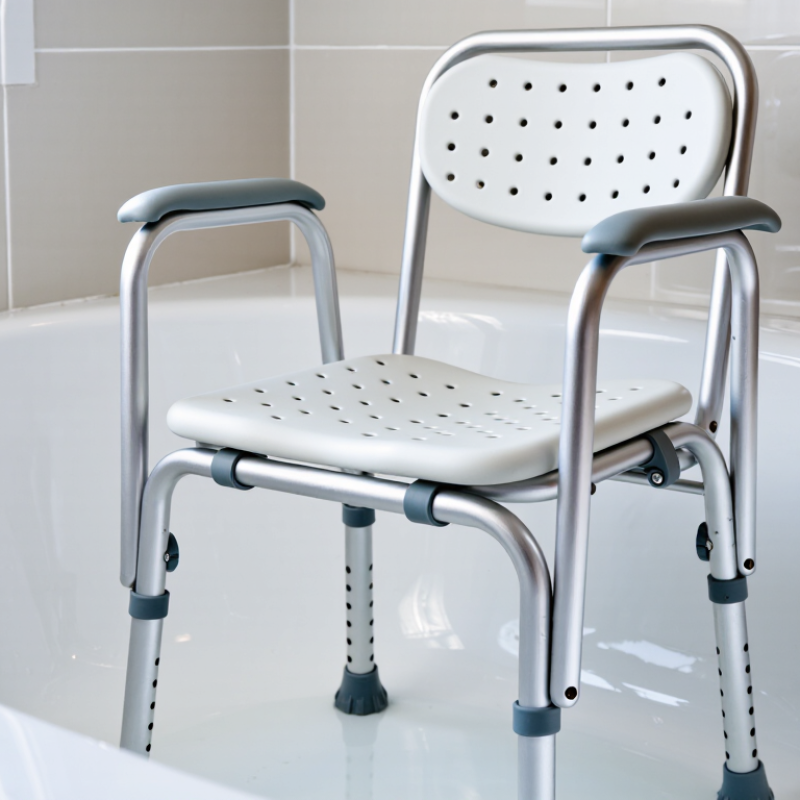
An aluminium bath chair is a lightweight seat designed for safer bathing. Its corrosion-resistant frame handles frequent contact with water. Many models include adjustable legs, rubber feet, drainage holes, and a supportive backrest. These details matter on a wet bathroom floor. A chair should feel stable, not merely look strong.
Older adults, people with balance problems, reduced leg strength, disabilities, or recovery-related fatigue may benefit most. The CDC reports that more than one in four adults aged 65 and older falls each year. Its fall injury data also records over three million emergency department visits annually among older adults. The World Health Organization identifies falls as the second leading cause of unintentional injury deaths worldwide. These figures do not make a bath chair a guaranteed solution. They show why seated bathing deserves practical attention.
Choose a chair matching the user’s height, weight, and bathroom layout. Check the stated weight limit carefully. Test every leg adjustment before use. A chair that shifts, rocks, or blocks the transfer path is unsuitable. Professional guidance helps when the user has severe weakness, dizziness, or recent surgery. Installation advice is often overlooked. So is cleaning. Soap residue can reduce grip on feet and floor surfaces. An aluminium frame may resist rust, but fittings still need inspection. The safest choice is not always the largest one.
An aluminium bath chair can look simple, yet small details control daily safety. The World Health Organization reports that falls cause about 684,000 deaths worldwide each year. Adults over 60 face the greatest risk. A stable chair is not a cure, but it can reduce risky standing and turning.
Choose a wide, non-slip seat with drainage holes. Rounded edges feel better against bare skin. Height adjustment should move securely, without loose pins or awkward tools. Check the rated load against the user’s weight, clothing, and movement. Four rubber feet need firm contact, even on wet tiles. Aluminium resists rust, but joints, screws, and welds still deserve close inspection. Look for testing aligned with ISO 17966, which addresses bathing assistive products. The report does not replace hands-on checking.
Tips: Sit before buying, if possible. Press each leg sideways. It should not wobble. Inspect the feet monthly. Replace worn caps early.
A backrest may improve comfort, but it can also make transfers harder in a tight bathroom. That trade-off is easy to miss. I would also avoid judging durability by weight alone; a heavier frame may feel stronger, yet poor drainage can leave hidden corrosion around fasteners.
2026 Best Aluminium Bath Chair Buying Guide
How to Choose the Right Size, Weight Capacity, and Adjustability
Bathroom falls deserve careful planning. The World Health Organization reports about 684,000 fatal falls worldwide each year. Older adults face the highest risk. The CDC also reports that over 14 million older adults in the United States fall annually. A stable bath chair cannot remove every hazard, but correct sizing can reduce avoidable strain.
Measure the tub width, available floor space, and user’s hip width before shopping. The seat should support the hips without pressing the thighs. Leave enough room for controlled transfers. Seat height matters too. When feet touch the floor, knees should remain near a right angle. Measure twice. I once underestimated tub clearance by only two centimetres. That small error made transfers awkward.
Check the chair’s rated capacity, including clothing and bathing accessories. Do not treat the advertised maximum as a comfortable target. A cautious choice leaves a clear reserve above the user’s actual weight. Ask whether the rating covers static sitting or movement during transfers. The National Institute on Aging recommends reducing bathroom fall hazards, including unstable seating and wet surfaces. Adjustable legs help level the chair on uneven floors, while height markings improve repeatable setup. Look for secure locking pins, non-slip feet, drainage holes, and corrosion-resistant aluminium. Test each adjustment before use. A chair may look sturdy but still flex under load. An occupational therapist can assess transfer technique, especially after surgery or balance loss. That professional check is often overlooked.
2026 Best Aluminium Bath Chair Buying Guide
Bathroom layout should decide the chair design, not appearance alone. The World Health Organization reports that falls cause about 684,000 deaths worldwide each year. Its 2021 Falls fact sheet also identifies older adults as especially vulnerable. A stable bath chair can reduce standing time, but poor placement creates new hazards.
For a compact alcove shower, choose a narrow aluminium chair with adjustable legs and drainage openings. Measure the door, wall-to-wall width, and turning space first. A backless stool may suit a tight corner, while a chair with arms needs extra side clearance. In a bathtub, a transfer bench is usually safer than a standard seat. It lets the user sit outside, slide across, and lift each leg over the tub edge. That design needs a firm, level rim and enough floor space beside the tub.
Walk-in showers allow more flexibility. A wider chair with a backrest can support longer washing sessions, especially where balance is limited. The U.S. Access Board’s ADA Standards provide useful seat height and clearance benchmarks, even for private renovations. Treat them as guidance, not a perfect fit. The CDC reports that more than 3 million older adults receive emergency treatment for fall injuries annually. That figure makes small details important: rubber feet, locked joints, rounded edges, and visible drainage paths. Aluminium is light and generally corrosion-resistant, but finishes and weld quality vary. Inspect them closely. Measure twice. Perfect fitting is rare.
Comparing bath chair designs for different bathroom layouts
The chart compares representative overall widths and front-to-back footprints for common aluminium bath chair designs. Compact stools suit smaller bathrooms, while back-supported and wheeled chairs generally require more floor space. Always verify the chair’s actual dimensions and maintain the clearances required by local building and accessibility regulations.
Choosing the best aluminium bath chair in 2026 starts with a close physical inspection, not a polished product photo. Run a finger along every weld. A smooth, even joint suggests controlled fabrication, while sharp edges or pinholes deserve caution. Press the frame gently on a level floor; it should feel stable without rocking. Check the stated load rating against the user’s weight, clothing, and movement during transfers. I once focused too much on seat comfort and overlooked a loose adjustment pin. That small mistake changed how I assess every fitting.
Look for corrosion-resistant aluminium and reinforced contact points around the legs, back supports, and seat brackets. Aluminium can resist moisture, but it is not immune to salt, harsh cleaners, or trapped grime. Inspect rubber feet for firm grip and even wear. Height holes should align clearly, and locking pins should engage fully. Ask for measured seat dimensions, net weight, warranty terms, and replacement-part availability. Reliable sellers should provide these details without vague promises.
After each use, rinse away soap and dry the chair, especially beneath the seat and inside joints. A soft cloth is safer than abrasive pads. Do not ignore white deposits, bent tubing, or a foot that keeps slipping. Stop using the chair until the cause is checked. Buying confidently means comparing evidence, not chasing the lowest price. Still, my judgment can be imperfect. A supervised bathroom test with the user seated can reveal more than a hurried showroom check.
| Evaluation Area | Recommended Practical Benchmark | How to Check Before Buying | Why It Matters | Maintenance or Safety Action |
|---|---|---|---|---|
| Frame material | Aluminium tubing with a smooth anodized, powder-coated, or otherwise protected surface. | Look for an even finish without exposed bare-metal patches, deep scratches, sharp edges, or visible bubbling. | Aluminium is lightweight and naturally forms a protective oxide layer, but surface damage and chemical exposure can accelerate corrosion. | Rinse away soap and salts, dry the frame, and repair or isolate damaged areas according to the care instructions. |
| User weight capacity | Choose a stated tested capacity that exceeds the user’s body weight; many domestic bath chairs are rated around 100–150 kg, but ratings vary. | Check the product label, manual, and technical sheet. Confirm whether the rating includes movement and transfers. | The published limit applies to the complete chair, not only the aluminium frame. | Never exceed the stated limit. Recheck bolts, welds, rivets, and seat supports regularly. |
| Seat height adjustment | A common adjustable range is approximately 400–550 mm, with secure increments often around 25 mm. | Measure the user’s lower-leg length and confirm that every adjustment hole, pin, or locking collar engages fully. | Correct height helps the user sit and stand with less strain while keeping both feet stable on the floor. | Set all legs to the same height. Do not use the chair if a pin is missing, bent, or only partially engaged. |
| Seat width and depth | Typical bath-chair seats are approximately 400–500 mm wide and 350–450 mm deep; measure the user and bathroom space. | Allow comfortable hip clearance without leaving the user unable to reach the backrest or arm supports. | A correct fit improves comfort, posture, and transfer control. | Keep the seat free of soap residue. Replace a cracked, loose, or deformed seat panel. |
| Base footprint and stability | All four feet should contact the floor evenly, with no rocking under normal seated loading. | Place the chair on a flat, wet surface and apply gentle pressure from the front, rear, and sides. Check the bathroom’s available floor area. | A wide, level footprint reduces the risk of tipping during sitting, standing, or repositioning. | Keep the feet clean and replace worn or hardened rubber tips in matching sets when possible. |
| Rubber feet and end caps | Feet should be non-slip, firmly attached, and free from cracks, flattening, or exposed metal. | Twist each foot gently and inspect the contact surface. Confirm that the feet remain fully seated after height adjustment. | The feet provide floor grip and prevent sharp tubing ends from damaging the bathroom surface. | Wash with mild soap and water. Do not use petroleum-based products that may damage rubber. |
| Drainage and drying | The seat should have drainage openings or a perforated surface that does not retain standing water. | Pour water over the seat and confirm that it drains freely without blocked openings or sharp molded edges. | Good drainage improves comfort and reduces soap, mineral, and microbial buildup. | Clear openings with a soft brush. Rinse and dry the chair after use where practical. |
| Fasteners and joints | Bolts, rivets, welds, and adjustment points should be even, tight, and free of movement or sharp projections. | Inspect every joint and gently test for looseness. Ask for replacement hardware availability before purchase. | Loose joints can create sudden movement even when the frame appears intact. | Tighten only as directed. Do not modify, drill, weld, or substitute critical hardware without technical approval. |
| Armrests and backrest | Choose supports that are secure, smooth, and compatible with the user’s transfer method and available space. | Check whether armrests obstruct side transfers and whether the backrest flexes or moves when lightly loaded. | Supports can improve posture and confidence but may create transfer hazards if poorly positioned. | Clean contact surfaces regularly and stop use if a support becomes loose or cracked. |
| Corrosion resistance | Protected aluminium with corrosion-resistant hardware is preferable, especially in humid or coastal bathrooms. | Ask which finish and fastener materials are used. Inspect hidden joints, tube ends, and areas where water may collect. | Moisture, chloride salts, and trapped cleaning chemicals can damage aluminium surfaces and metal fasteners over time. | Avoid prolonged contact with concentrated chlorine, bleach, acids, abrasive cleaners, and salt residue unless the instructions specifically permit them. |
| Cleaning routine | Use warm water and a mild, non-abrasive detergent for routine cleaning. | Confirm that the care label permits the intended disinfectant and follow its required dilution and contact time. | Incorrect chemicals can discolor surfaces, weaken rubber, or accelerate corrosion. | Rinse thoroughly after cleaning and dry joints, tube ends, adjustment holes, and feet. |
| Inspection frequency | Perform a quick visual and stability check before each use; conduct a more detailed inspection at least monthly or as the manual requires. | Check frame cracks, bent tubing, loose hardware, damaged feet, seat movement, corrosion, and missing adjustment pins. | Early detection helps prevent failures during transfers and bathing. | Remove the chair from service immediately if structural damage, excessive movement, or an unstable foot is found. |
| Documentation and confidence check | A complete manual should state dimensions, adjustment method, maximum user weight, cleaning instructions, warnings, and replacement-part information. | Request the technical sheet, user instructions, test documentation, return terms, and support contact before payment. | Clear documentation makes the product easier to select, use, maintain, and replace safely. | Keep the manual and record inspection or replacement dates for feet, hardware, and other wear parts. |
I&M Industrials Inc.
10 Akron Drive
Greenville SC 29605
Phone: 864-277-2450
GSA Number – GS07F0379Y